


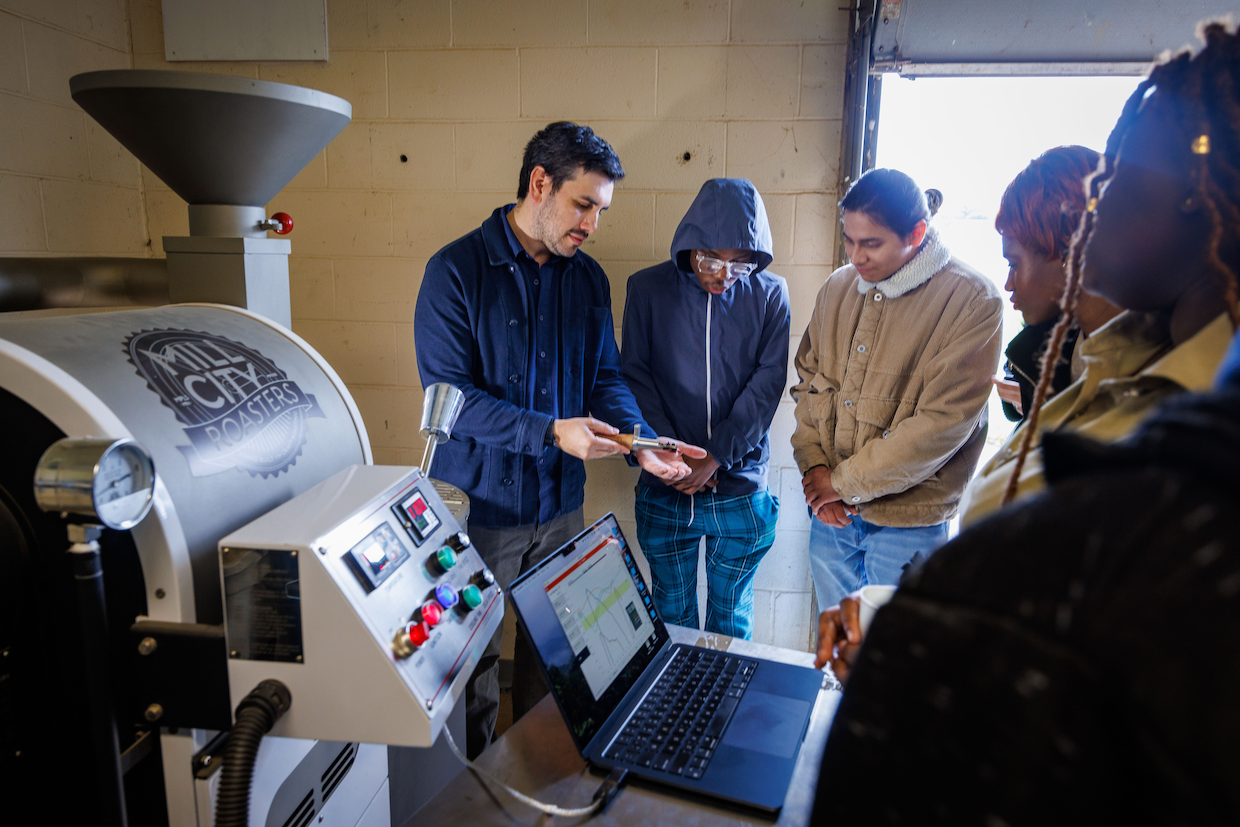
David Gonthier leading students through a roast. Photo courtesy of the University of Kentucky Martin-Gatton College of Agriculture, Food and Environment, Matthew Barton.
The University of Kentucky is getting its first-ever coffee education program for undergraduates this fall.
David Gonthier, an associate professor in the UK Department of Entomology at the Martin-Gatton College of Agriculture, Food and Environment (CAFE), led the development of the program.
UK graduate fellow Briana Bazile and Martin-Gatton CAFE research analyst Viktor Halmos helped develop the curriculum, which leads to a “Coffee, Science and Culture” certificate.
Two new courses anchor the curriculum: COF 301 “Not Just Coffee” and COF 302 “Coffee Sensory Science.”
The first course delves into the history of coffee, including cultural and historical influences, while the second offers a more hands-on introduction to coffee tasting.
While the certificate is designed to span the coffee value chain — from farm to cup — Gonthier said he hopes to add more lab-based experiences over time, including more on roasting, brewing and business practices.

Viktor Halmos, David Gonthier and Briana Bazile. Photo courtesy of the University of Kentucky Martin-Gatton College of Agriculture, Food and Environment, Sabrina Hounshell.
“Another big thing I really hope to do is provide study abroad opportunities — trips to origin built around seeing examples of different types of coffee production systems and how those are all set up,” Gonthier recently told DCN.
Gonthier traces much of his interest in coffee to family ties in Honduras, where he said he spent time with relatives who farm coffee.
After completing his undergraduate studies in 2007, he took a year off to move to Honduras, his mother’s home country, and reconnect with family. There, he worked with his cousin, a conservation biologist and coffee farmer, on projects such as documenting bird species in national parks. He also dove into coffee farm operations, learning about production practices, pest management, organic management and farmer-focused business strategies.
“I think the biggest eye-opening thing for me was living in rural Honduras and being able to really be close with people who are coffee farmers or even coffee farmworkers and seeing the struggles that they had in that part of the world,” Gonthier said. “[It] really kind of galvanized me to try to always want to do more and really learn about what coffee can provide to these producers.”
Gonthier went on to earn a Ph.D. from the University of Michigan while studying the benefits of shade-grown coffee systems in Chiapas, Mexico. He has also made frequent visits to the coffee lands of Honduras.
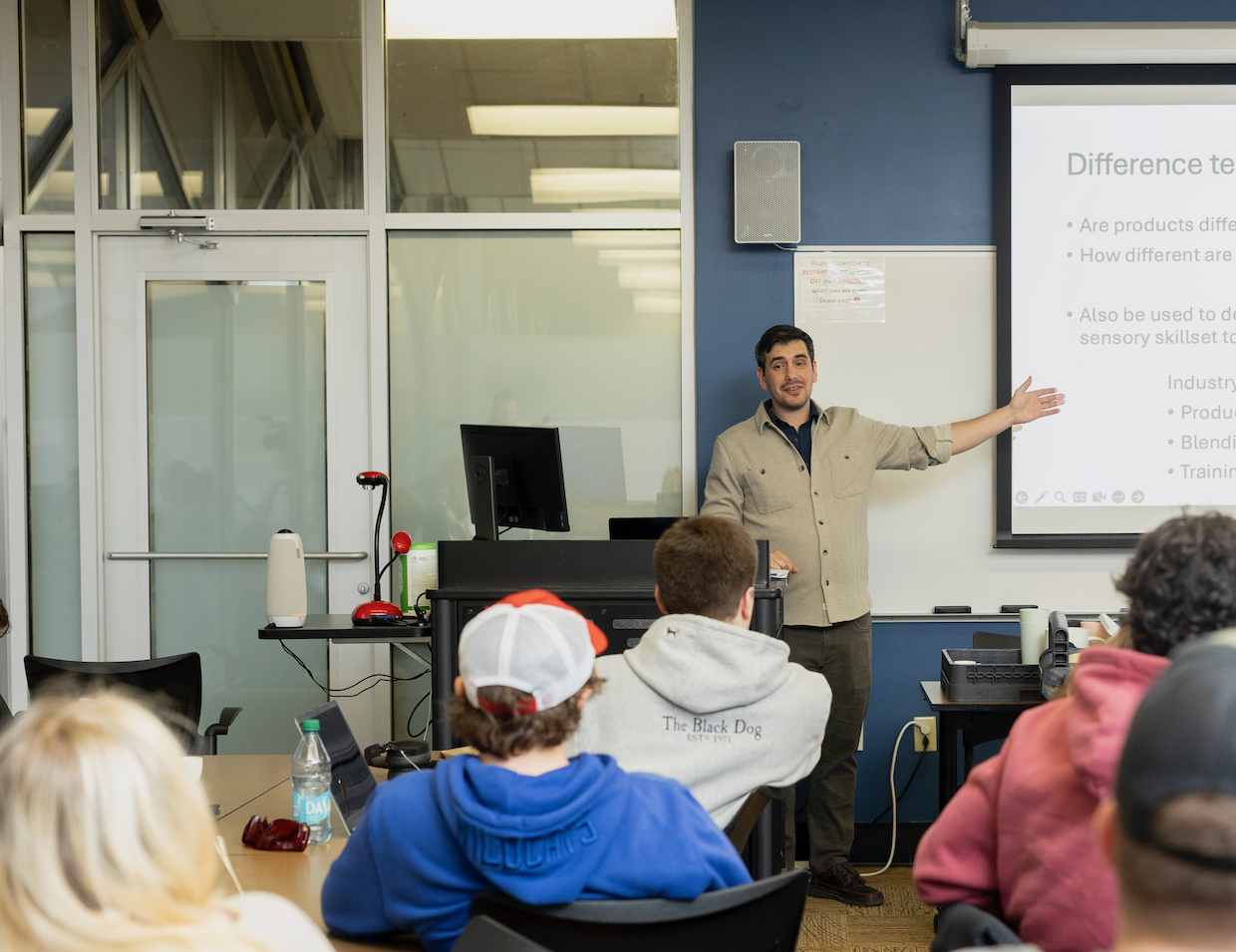
Photo courtesy of the University of Kentucky Martin-Gatton College of Agriculture, Food and Environment, Sabrina Hounshell.
At UK, the first coffee course Gonthier taught was built around what connects us to coffee and why. Not long after that, he bought a 3-kilogram-capacity Mill City roaster, found a space on the UK Horticulture Research Farm (South Farm) and started calling it the UK Coffee Lab, a research education center with the goal to be fully student-run.
Here’s more from DCN’s interview with UK Coffee Lab creator David Gonthier…
What about coffee excites you most?
I went to the SCA conference last year and I was in a workshop with Pedro Manga from Caravela Coffee, and I guess what excited me most… was seeing a room full of people who were all creating very unique pathways and models for supporting and building better relationships with coffee farmers.
What about coffee troubles you most?
Low prices for coffee farmers or even just the struggles of coffee farmers. I guess even right now the prices are the best they have been in a long time, but… it just seems like such a struggle to be really profitable, especially for smaller farmers. But then, on the flip side, I am also pretty concerned about small coffee roasters and whether they [are], with these higher prices that are there, being put at a large disadvantage.
What would you be doing if it weren’t for coffee?
I would probably be doing more work in food systems or fruit and vegetable research here in Kentucky.
Comments? Questions? News to share? Contact DCN’s editors here. For all the latest coffee industry news, subscribe to the DCN newsletter.
Related Posts
Daria Toptygina
Daria Toptygina is a freelance writer, avid coffee lover and social media manager of Daily Coffee News by Roast Magazine.

Comment