


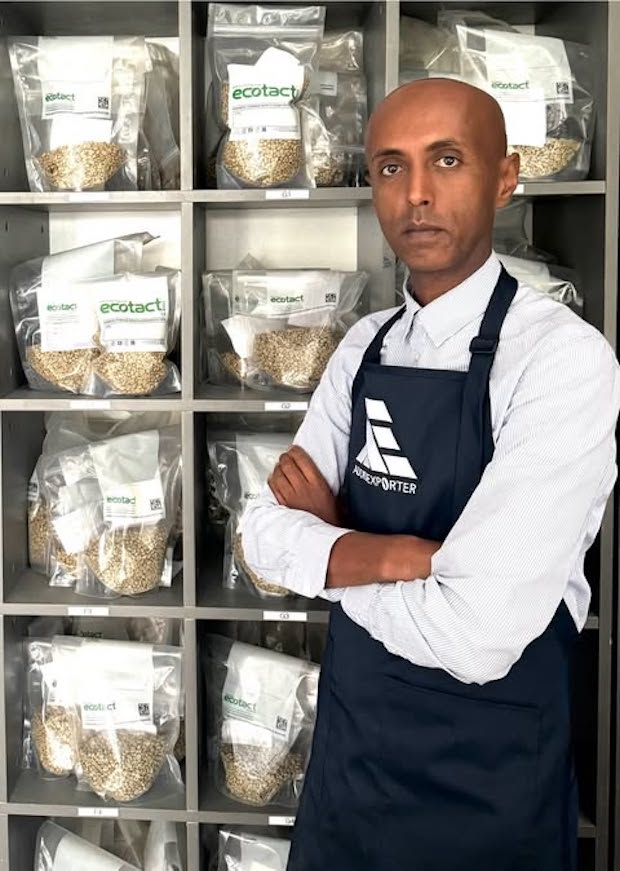
Mike Mamo of Addis Exporter. Courtesy photo.
As a world-class runner attending college in the United States, Mike Mamo had little inclination to join his family’s coffee business, Addis Exporter, founded by his father in Ethiopia.
“I wasn’t passionate about coffee,” Mamo recently told Daily Coffee News. “I didn’t know anything about it.”
After graduating from college in 1998 and suffering a series of injuries that hindered his professional running career, Mamo said he came to coffee “sort of by default.”
In 2003, Mamo left running and took a giant cross-continental leap to join the family business, which dates back to 1972 and now describes itself as the “OG of Ethiopian coffee.” Having not lived in Ethiopia since 1981, he said the experience felt like learning an entirely new language in a different culture.
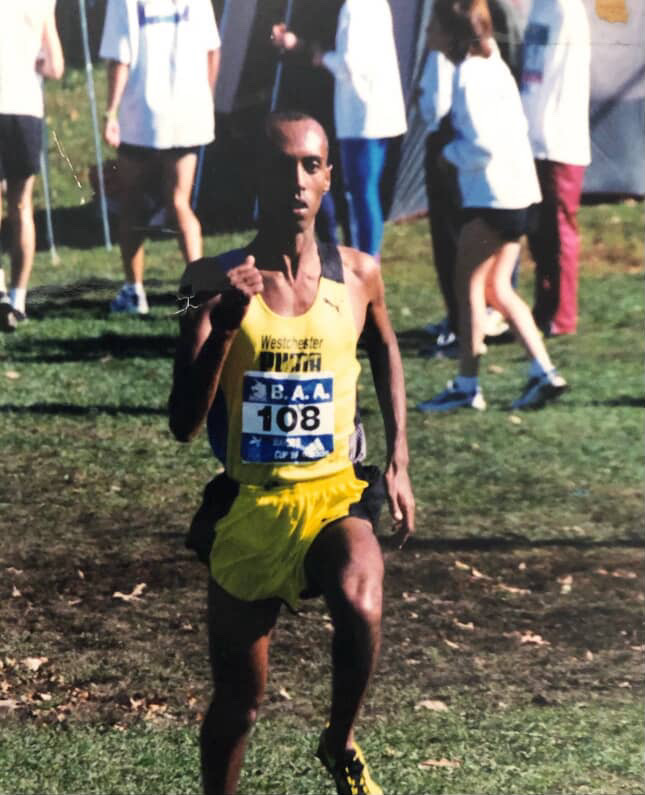
Mike Mamo of Addis Exporter. Courtesy photo.
Yet coffee began to provide daily enjoyment, and Mamo began to see its potential to help people around him in different parts of the supply stream.
“I started seeing the possibilities of what you can do with coffee,” he said. “I think a lot of people are in coffee because they believe in it.”
Now, more than two decades after returning to Ethiopia, Mamo is the managing director of Addis Exporter, overseeing operations from farming and processing through export. Today, he said, “The human connection and the relationships we have with the farmers is the best part of the work.”
Addis Exporter currently operates the Atoma and Telila washing stations in Gera, while providing a broad range of Ethiopian coffee production and trading services to international buyers. The company says it remains focused on quality and traceability, helping to facilitate direct trade between farmers and roasters.
“The cool thing is that we’re seeing their lives really changing,” Mamo said of the farmers within Addis Exporter’s network. “It’s really important that we’re empowering farmers and they can negotiate their prices.”
The coffee industry has evolved significantly since Mamo started working in coffee, with increased focus on product differentiation, quality and regional differences.
“Coffee is a vital industry for the GDP of the country,” Mamo said. “It’s more than just this product that we enjoy. It’s necessary for most people.”
For Mamo, coffee and running remain intertwined.
“Coffee is like running a marathon,” he said. “You put in all the work, hoping you don’t get injured. The same is true in coffee. You hope you don’t have an unfavorable weather pattern. There’s the logistics, the uncertainty, but also the endurance it takes to keep going.”
Here’s more from our conversation with Mike Mamo…
What about coffee excites you most?
There are a lot of things that excite me, but I’ll focus on two. Number one would be the work that we’re doing with smallholder farmers and seeing their lives change. We’re seeing farmers buying homes, sending their children to better schools and having more of a say in their narrative. They’re diversifying their crops, which we want them to do because, with the coffee industry, today is good but tomorrow is something different. The second would be the washing stations, Atoma and Telila, that we own as Addis Exporter. We’re working in a tiny community that doesn’t have the ability to export directly, so working with them so they have more ability to try something new, to process differently.
What about coffee troubles you the most?
My uncle, Tadesse Meskela, used to be the head of the Oromia Coffee Farmers Cooperative Union. He was featured in the movie, Black Gold. At the time, the union represented over 400,000 coffee farmers, so my first time going to origin was with him. We went to Yirgacheffe, and seeing the poverty shocked me. At that time, I wasn’t knowledgeable about coffee at all, but I knew that Yirgacheffe grows [some] of the best coffee in the world, so the poverty surprised me. I think the point is for farmers to have a sustainable livelihood with water and electricity and to be able to send their kids to school. Seeing the farmers’ livelihood, even now, is what troubles me about coffee.
What would you be doing if it weren’t for coffee?
Something with running. I still love running, and I want to be one of the top masters runners. I want to try to run a fast time at age 50.
Comments? Questions? News to share? Contact DCN’s editors here. For all the latest coffee industry news, subscribe to the DCN newsletter.
Related Posts
Jen Roberts
Jen Roberts is a Paris, France-based writer and avid coffee drinker. She’s currently writing a book on women in coffee.



Comment