

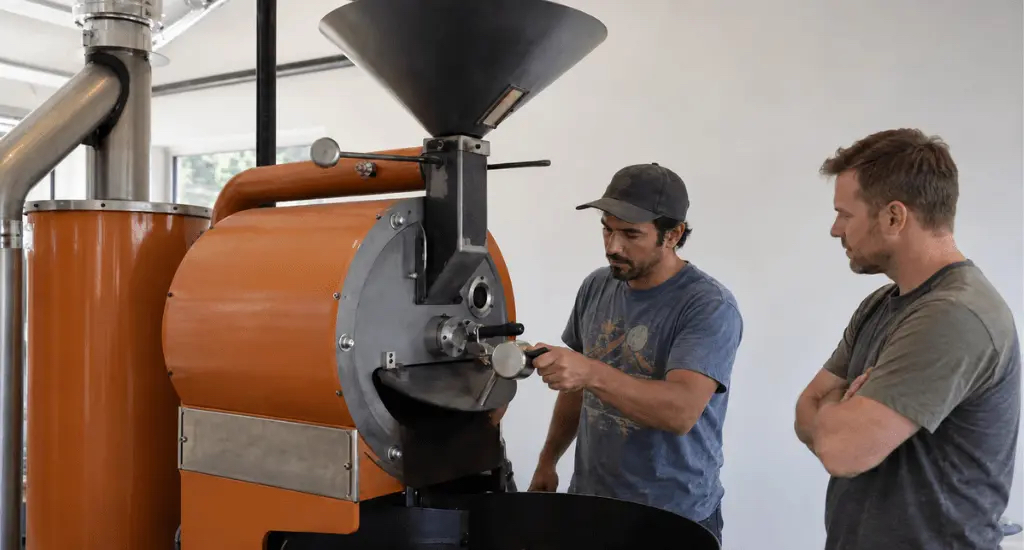
Image courtesy of CoffeeTec.
Used roasters have quietly become one of the most common ways smaller roasters and cafes get their first serious machine. They typically cost less than new equipment, they show up on the market more often than most buyers expect and, for a business trying to bring roasting in-house without a six-figure commitment, they can provide a realistic path.
But that path comes with real hesitation. A new roaster comes with a warranty and a manufacturer standing behind it. A used one doesn’t, and that missing safety net changes how buyers think, what they ask before they commit and how carefully they need to look before money changes hands.
Over the past few years of used-roaster transactions, the same questions have kept coming up from buyers weighing that decision. Paired with a full year of marketplace data on how this segment actually behaves, those questions point to a clear, repeatable way to buy used roasters with confidence instead of guesswork.
What Buyers Ask Before They Commit
Buying a used roaster is a lot like buying a used car from the 1970s. It might run great for another 10 years or it might turn into a money pit. Buyers tend to ask the same questions before they decide. Here are 10 useful questions that frequently come up:
- Will it become a money pit without a warranty? This addresses the core financial risk. This is the question underneath every other question.
- Can I see it actually running before I commit? Buyers want a live test roast, or at least video proof that the machine works as described.
- Are parts and manuals available, and does this brand have a reliability reputation? This is especially important for older or discontinued models.
- Who installs it, and who services it after the sale? A used machine rarely comes with the support a new one does.
- Do I have the mechanical skill to maintain this myself? Buyers want to know how hands-on ownership will really be.
- How old is too old? Does this roaster have a real lifespan? Age alone is a common red flag buyers raise, even though most parts can be replaced.
- What am I giving up in value compared to buying new, and how does resale compare across brands? This covers both the discount they’re getting and the total cost over time.
- How hard is it to physically move this machine? Rigging, doorways, gas lines, and venting are easy to underestimate.
- Will the afterburner or emissions compliance add a high hidden cost? Older machines sometimes need compliance upgrades that buyers don’t expect.
- What size do I actually need for my production volume? Buyers want to avoid over-buying or under-buying capacity.
What the Experts Say
We pulled together guidance from experts within the industry, and we found the advice lines up almost everywhere. Here’s what they consistently point to when buying a used roaster:
- Physical condition. Check for rust, cracks in the drum or the outer casing, and general wear.
- Maintenance history. A seller who can show maintenance records is one of the best signs the machine is trustworthy.
- Parts availability. This matters a lot when the model is older or no longer made.
- Compliance rules. Older machines may need updates to meet emissions or electrical rules.
- The “fatal flaw” test. A cracked casting isn’t something you fix. It’s a reason to walk away.
- Right-sizing. Buy for what you roast now, not what you hope to roast someday.
- Independent inspection. Get a technician to check the machine before any money changes hands.
What the Data Actually Shows
CoffeeTec’s marketplace data may provide some insight into how buyers behaved over the past year. Here’s what a full year of used roaster sales shows:
Steady demand, not seasonal spikes
Over the 12 months from September 2025 to August 2026, the marketplace saw 65 roaster units sold across 59 listings. Buyer activity stayed strong all year, with 503 total items ordered. The busiest months were June (60 items) and September (59 items), but even the slower months stayed healthy. This tells buyers something useful: good used equipment does not sit around waiting for one “buying season.” It moves all year.
Most used roasters sell below new prices
When roasters are grouped by price, the mid band ($10,000 to under $50,000) and budget band (under $10,000) hold almost all the volume. Only one machine was sold in the industrial tier ($100,000 and up), a 45-kilogram Probat at $145,000.
The used roaster market is growing
Comparing January through August 2025 to the same months in 2026, roaster units sold jumped from six to 44. Store-wide items ordered rose 80%, and completed checkouts rose 94%. Growth happened across every weight class. The medium class (5-kilogram to under-20-kilogram) went from zero units sold in 2025 to 16 units in 2026, the biggest jump of any category.
Bringing It Together: A Practical Approach
Buying a used roaster well starts long before the machine ever reaches your shop. It starts with asking the right questions, checking the right things and treating quality control as the first step, not an afterthought once the equipment already belongs to you.
The process can come down to a short list of steps, done in order:
- Ask for maintenance records first. This tells you more about the machine’s condition than almost anything else.
- Get an independent inspection before you commit. A technician who has no stake in the sale can give you an independent assessment.
- Plan for hidden costs. Installation, compliance updates and freight can add up fast if you don’t budget for them early.
- Time your search with the market. Demand doesn’t disappear in the slower months, so good machines can still show up year-round.
Following this order can help buyers catch problems while they’re still small and inexpensive to address, rather than after the machine is already running in their shop.
As more buyers go through this process and more transaction data becomes available, the used equipment market keeps getting easier to navigate. Every year, there’s a clearer picture of what good buying looks like, and that makes the whole segment a little more approachable for the next roaster or cafe making this important decision for the first time.
Daily Coffee News does not engage in sponsored content or affiliate linking of any kind. Any statements or opinions expressed belong solely to the author/s and do not necessarily reflect the views of Daily Coffee News or its management.
Comments? Questions? News to share? Contact DCN’s editors here. For all the latest coffee industry news, subscribe to the DCN newsletter.
Related Posts
Scott K. Plail
Scott K. Plail is President and CEO of CoffeeTec, a marketplace for buying and selling new and used coffee roasting equipment since 1972.


Comment