

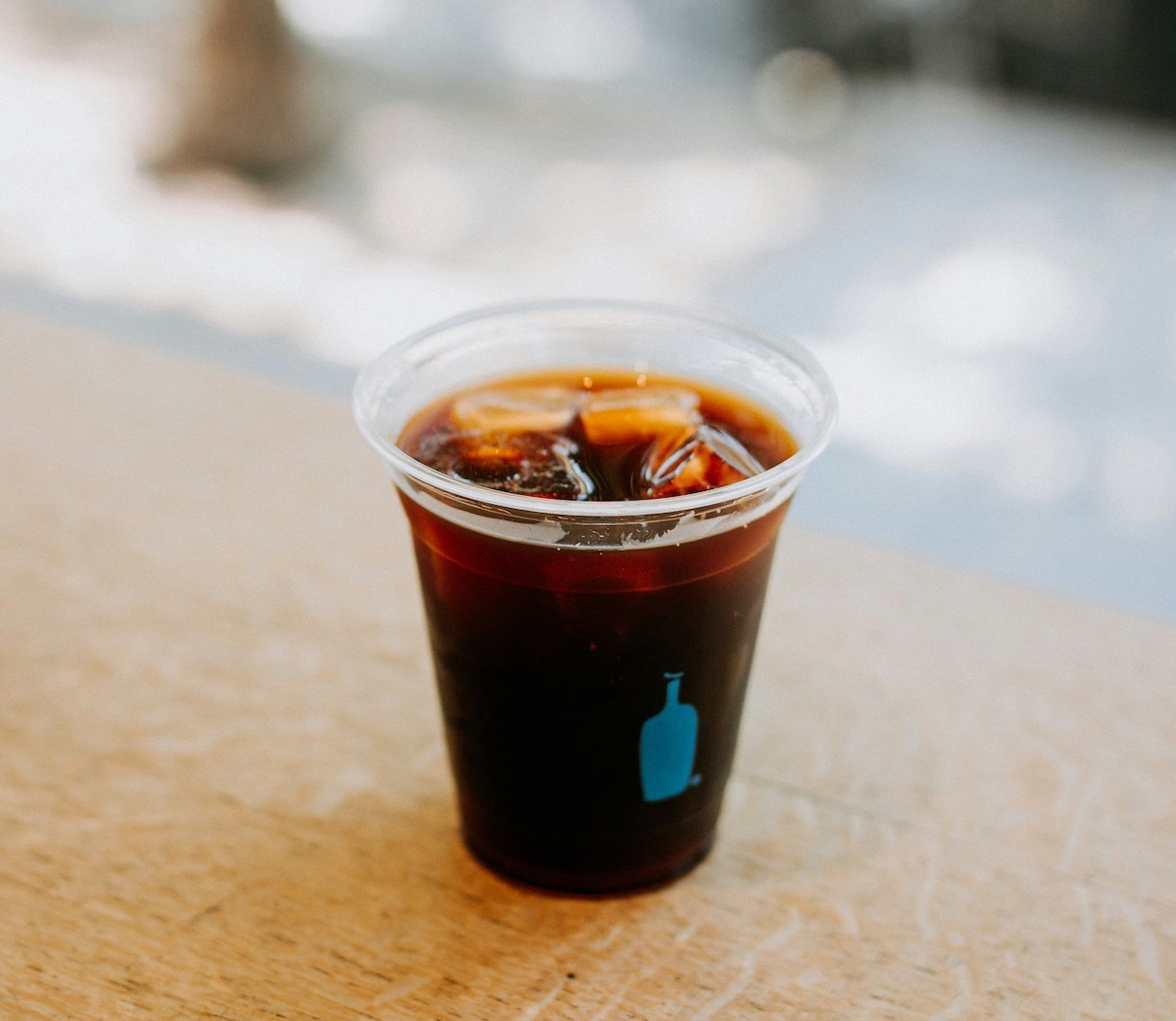
A Blue Bottle Coffee cup. Stock photo.
Unionized baristas at Blue Bottle Coffee staged a multi-day strike over the Thanksgiving shopping weekend, intensifying a year-long contract fight with the Nestle-owned company.
Roughly 120 workers across nine unionized cafes in greater Boston and California’s East Bay walked off the job beginning Wednesday, Nov. 26, in the strike organized by the Blue Bottle Independent Union (BBIU), the group said.
The walkout affected six Boston-area shops plus three Bay Area cafes in Berkeley, Old Oakland and Piedmont, with picket lines and calls for customers to boycott Blue Bottle until a first contract is reached.
According to a Harvard Crimson report, the BBIU is seeking a starting wage of $30 an hour in Boston based on the MIT Living Wage Calculator, along with raises tied to seniority, predictable scheduling and stronger protections against harassment and arbitrary discipline.
In an announcement shared with DCN, BBIU said workers have reported “deteriorating working conditions” since Blue Bottle was acquired by Nestle in 2017 for approximately $500 million.
The union has alleged several unfair labor practices in the past year, citing the recent termination of BBIU treasurer and communications director Abbey Sadow, a Boston-area barista, for an alleged dress code violation.
“Blue Bottle baristas see 46% of their income going towards rent, with roughly a third of baristas paying over 60% of their income toward their rent,” BBIU said in a press release on the eve of the strike. “Blue Bottle Coffee operates in some of the most expensive cities in the U.S., and around the world. With stagnant wages and a refusal to bargain, the baristas have decided it’s time to take action.”
In a statement to the Boston Globe early last week, a Blue Bottle spokesperson said the company is committed to bargaining in good faith and has responded to all proposals brought forth by the union. That echoes a statement the company provided to DCN when Boston-area workers first voted in favor of unionization in May 2024.
Blue Bottle currently has approximately 78 cafes throughout the U.S., plus dozens more in six other countries.
Comments? Questions? News to share? Contact DCN’s editors here. For all the latest coffee industry news, subscribe to the DCN newsletter.
Related Posts

Comment