



A new study offers a mathematical model for predicting how water flows through a coffee puck, presenting a framework that might ultimately help baristas remove some of the guesswork involved in dialing in espresso.
The research, published April 1 in Royal Society Open Science, tackles a simple question: Given a specific grind size and packing density, how fast will water move through the coffee? Guided by a volcanologist who sought to apply some geologic principles to coffee, the paper addresses that question of permeability.
Permeability is a major issue in daily espresso making. If a puck is too permeable, the shot may run fast and under-extract. If it is too resistant, the shot may slow down and skew bitter or over-extracted. Many of the variables a barista can adjust — especially grind size, dose and packing density — influence permeability and flow rate, which in turn affect extraction and cup quality.
The Approach
To test the mathematical models, the researchers scanned packed beds of ground coffee using X-ray computed micro-tomography, then ran fluid-flow simulations through the resulting 3D structures.
They used two coffees roasted by UK-based Square Mile Coffee Roasters — Tumba from Rwanda and Guayacán from Colombia — each ground at 11 settings on a Mahlkönig grinder, from very fine to coarse.
The study tested two existing theoretical approaches to permeability: the Kozeny-Carman equation and a percolation-theory model that accounts for the possibility that pore networks can stop conducting flow effectively once packing becomes too tight.
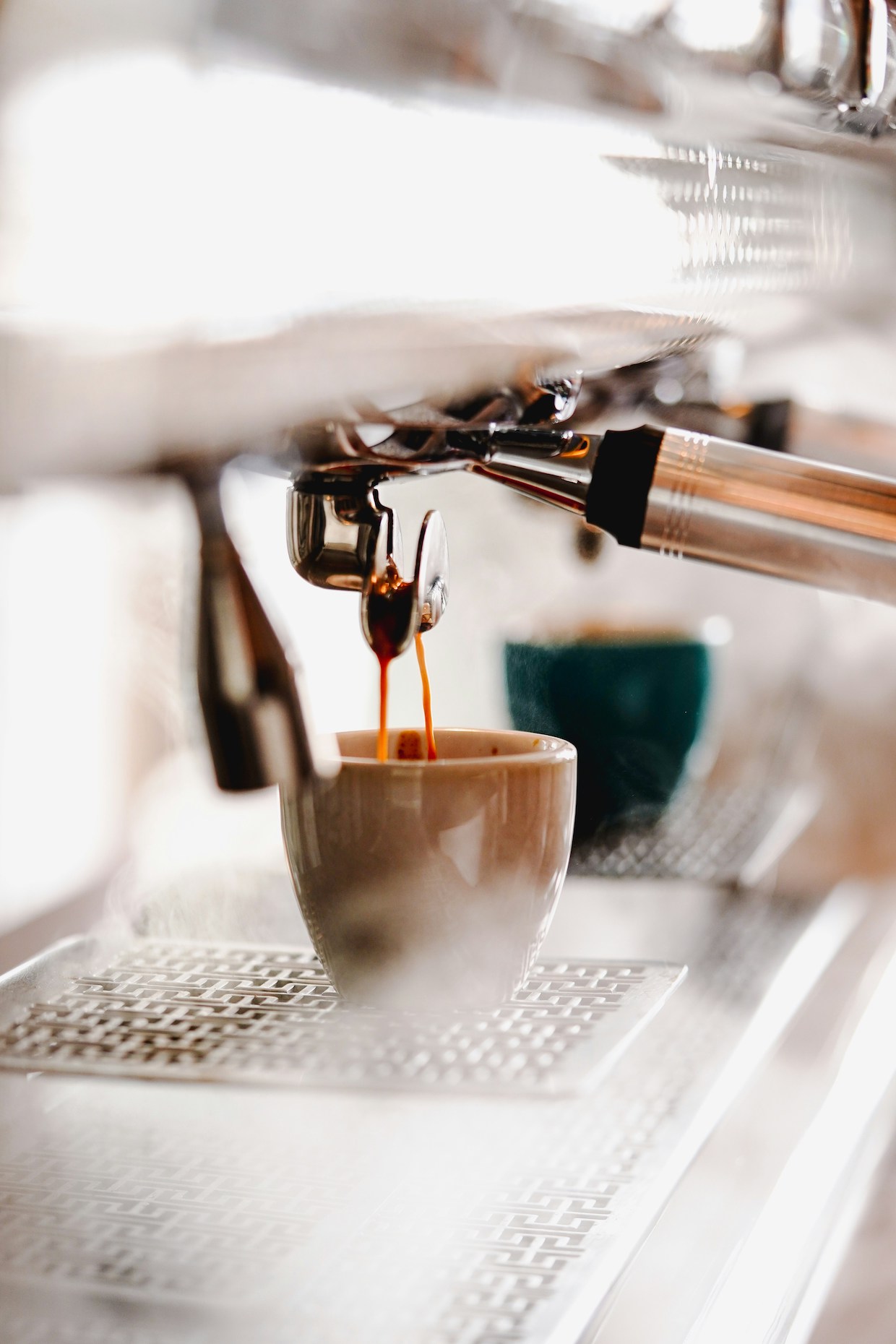
Sure enough, through both models, grind setting and packing density were the dominant factors affecting permeability of the coffees, while coffee variety and roast level were secondary factors. This suggests the models could apply to different coffees, although the authors stressed that differences in grinders could also greatly affect results.
The researchers found that the percolation-based model matched the coffee data better than the older Kozeny-Carman model, especially in denser, lower-porosity samples.
Takeaways for the Coffee Industry
For coffee people, one of the clearest takeaways is that finer grinding usually slows water flow through the puck, but not by a fixed amount from one grind step to the next. That is because the relationships among particle size, specific surface area and permeability are nonlinear, according to the authors. Small grind changes can therefore produce disproportionately large shifts in resistance and shot time.
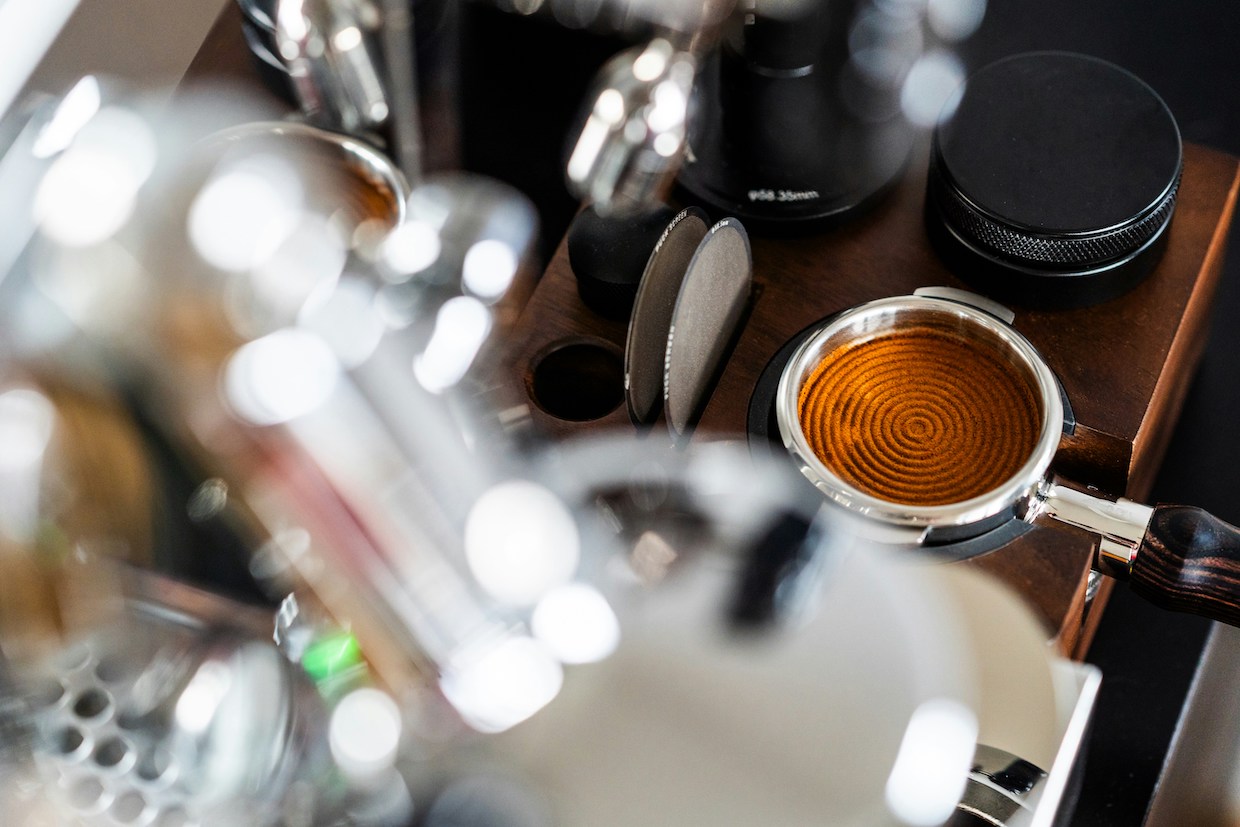
The paper also reinforces something that baristas may intuitively notice every day: Grind size and dose are the dominant factors affecting permeability, while tamping plays an important but secondary role.
The authors do not present the model as a one-step recipe generator. They note that grinder calibration differs by burr set and manufacturer, and that important real-world complications remain, including fines migration during extraction and the possibility that coffee particles swell as they get wet.
Research Context
The paper adds to a growing body of work that models espresso extraction for potential practical applications.
A 2023 Physics of Fluids paper helped explain why finer grinds can sometimes produce weaker espresso by promoting uneven extraction. That work built on earlier multiscale mathematical modeling of coffee-bed flow and extraction dynamics.
Christopher Hendon, a co-author of the new study, also co-authored a 2020 paper arguing that lower doses and coarser grinds could produce more even and reproducible espresso, challenging some traditional recipe assumptions.
The lead author of the new study is Fabian Wadsworth from the Department of Earth and Environmental Sciences at Ludwig-Maximilians-Universität München. Co-authors are affiliated with institutions including Lancaster University, the University of Strathclyde, the University of Bristol, Durham University and the University of Oregon.
The study received financial support from multiple research institutions in Europe and the UK. The authors declared no competing interests.
Comments? Questions? News to share? Contact DCN’s editors here. For all the latest coffee industry news, subscribe to the DCN newsletter.
Related Posts



Comment