


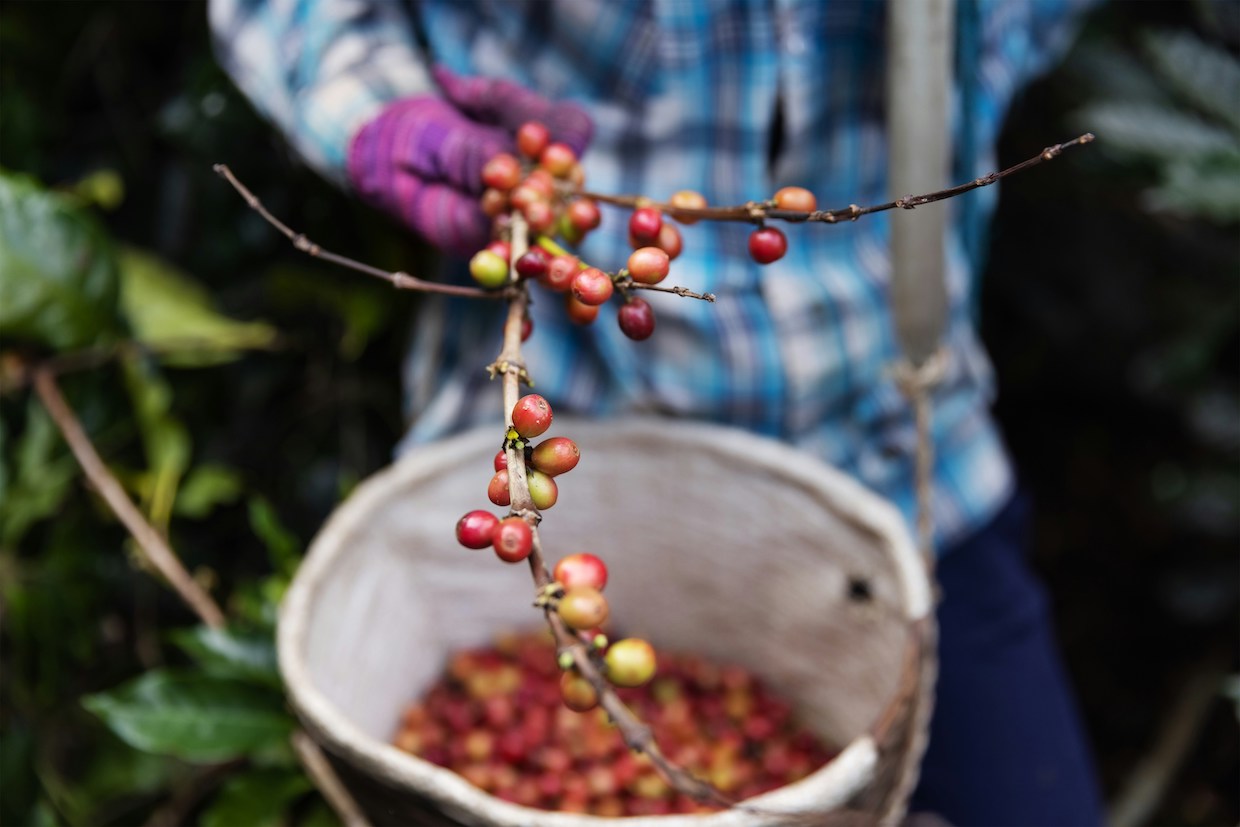
A recent review of more than two decades of coffee sustainability research found that while the field has grown considerably in the 21st century, it remains fragmented.
Published in Sustainable Futures, the review comes from researchers at the University of Naples Parthenope and the University of Tuscia in Italy.
Using a combination of PRISMA-guided systematic review methodology and VOSviewer bibliometric mapping — a software tool that visualizes how research themes cluster and connect — the team selected 137 peer-reviewed publications from 2000 to 2024 to map the terrain of coffee sustainability research.
All the qualifying papers were peer-reviewed, English-language journal articles or reviews focused specifically on the coffee supply chain — not just coffee broadly — and had to directly address at least one of the study’s research questions: stakeholder roles, coffee byproduct reuse, consumer behavior or digital traceability.
The authors presented the review less as a new discovery than as a map of where coffee-supply-chain research is heading and where major blind spots remain.
Growth in the 2010s
Among the 137 papers chosen, publication activity accelerated beginning in the late 2010s. The authors attributed that growth to climate instability, rising consumer demand for ethical products, the emergence of blockchain and IoT technologies, and growing regulatory interest in food system sustainability.
In terms of institutional geography, the U.S. and Brazil were most heavily represented, followed by India, Italy and Indonesia. The authors also noted significant research gaps, particularly among coffee-producing countries across Central America, East Africa and Southeast Asia.
Areas of Focus
Stakeholder Research
Despite the often fragmented nature of academic research, the authors noted that the coffee supply chain remains a tightly connected system. Sustainability pressures now run through the full chain, from cultivation and processing to roasting, packaging, marketing and final consumption. The authors advocated for a “cohesive and data-driven approach to sustainability in the coffee sector.”
Coffee Waste/Circularity
The review highlights coffee waste — both at the production and consumption levels — as one of the industry’s biggest underdeveloped opportunities. It noted that more than 90% of spent coffee grounds are still landfilled, even as the literature points to possible uses in compost, fertilizers, cosmetics, energy, construction materials, food products and pharmaceuticals.
The analysis suggests the technical potential is real, but large-scale adoption is still limited by processing costs, regulatory barriers and a lack of common standards.
Consumer Preferences
The review said consumer preferences are reshaping production and trade decisions throughout the coffee supply chain.
Citing prior survey research, the authors noted that more than 60% of consumers in North America and Europe prefer certified coffees such as organic, Fair Trade or Rainforest Alliance offerings and are willing to pay more for traceable, single-origin products. The authors said that demand has pushed producers toward organic and shade-grown practices and encouraged exporters and roasters to invest in more direct-trade and traceability models.
Yet the paper also noted that meeting those expectations can raise costs for smallholder farmers, potentially worsening inequities if support systems do not keep pace.
Tech Research
The review points to blockchain, AI, IoT and GIS as the most discussed digital tools in recent research. The authors said these technologies can improve traceability, optimize logistics, support farm-level decision-making and give consumers more information about coffee origin and quality.
However, the authors repeatedly stressed that the biggest obstacles are not conceptual but practical, pointing to cost, infrastructure, scalability and uneven access among smallholder farmers.
The study received financial support through Italy’s National Recovery and Resilience Plan. The authors declared no known competing financial interests or personal relationships that could have influenced the work.
Comments? Questions? News to share? Contact DCN’s editors here. For all the latest coffee industry news, subscribe to the DCN newsletter.
Related Posts


Comment