


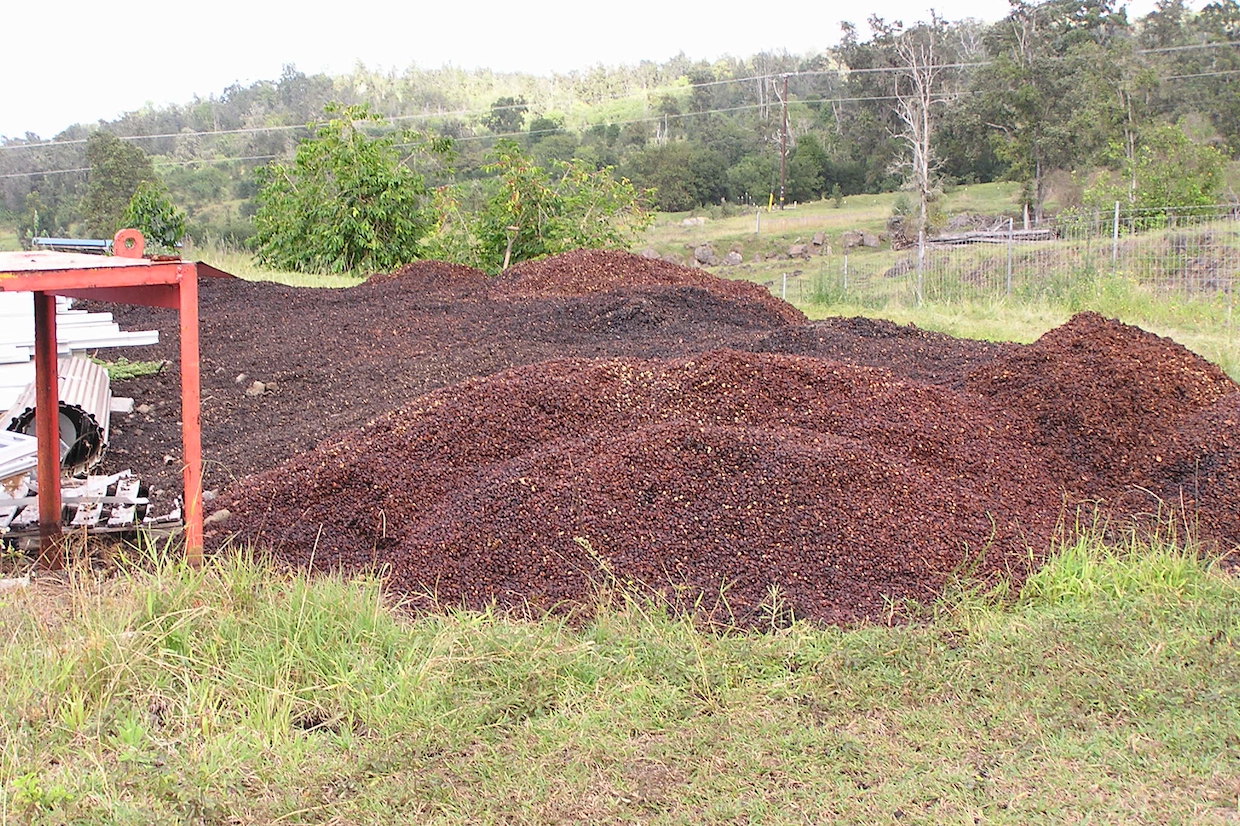
A pile of coffee pulp. Public domain photo.
A clinical trial in Thailand found that a drink made from arabica coffee pulp, the fruit material often discarded or composted during coffee processing, may modestly improve cholesterol markers in adults with obesity.
The study, published March 12 in Frontiers in Nutrition, tested a liquid supplement made from pulp-derived extract — sold commercially under the name Coffogenic — against a placebo in 79 adults with BMI of at least 25 and LDL cholesterol of at least 130 milligrams per deciliter.
Caveats
Notably, the study received support from Thailand Science Research and Innovation and an educational grant from Hillkoff Co., a Chiang Mai-based coffee company that provided the extract used in the study and markets Coffogenic in connection with cholesterol management. The author team, from Chiang Mai University, the University of Phayao and Maejo University, declared no conflicts of interest.
Additionally, the trial data were collected from November 2019 through June 2020, nearly six years before publication. The paper does not explain the gap between the trial and publication.
Methods and Findings
The study tested the drink against a placebo over 24 weeks. Participants who drank 75 milliliters of the extract twice daily saw their LDL cholesterol drop 14.9% from baseline, compared to 7.7% in the placebo group. After adjusting for starting lipid levels, LDL fell 13.7% in the extract group versus 7.1% in the placebo group, while triglycerides moved in a favorable direction without reaching statistical significance.
Secondary outcomes — including body weight, waist circumference and insulin resistance — also favored the extract-drinking group, though the authors cautioned that some changes were modest and reflected statistical rather than clear clinical significance.
The authors suggest the extract may work by disrupting cholesterol micelle formation in the intestine — essentially making dietary cholesterol harder to absorb — a mechanism they compared to the prescription drug ezetimibe, which has been shown to reduce LDL by around 17%.
Pulp for Health
As DCN has documented, coffee pulp and cascara have been growing as consumer ingredients, with companies like PectCof attracting investment for pulp-derived food applications.
Marketers of coffee pulp extracts and other pulp-derived products often note that the material is typically rich in chlorogenic acid and other polyphenols that have documented health benefits. One recent study found that a coffee pulp powder might enhance the health-related and flavor attributes of burger patties.
Comments? Questions? News to share? Contact DCN’s editors here. For all the latest coffee industry news, subscribe to the DCN newsletter.
Related Posts



Comment