


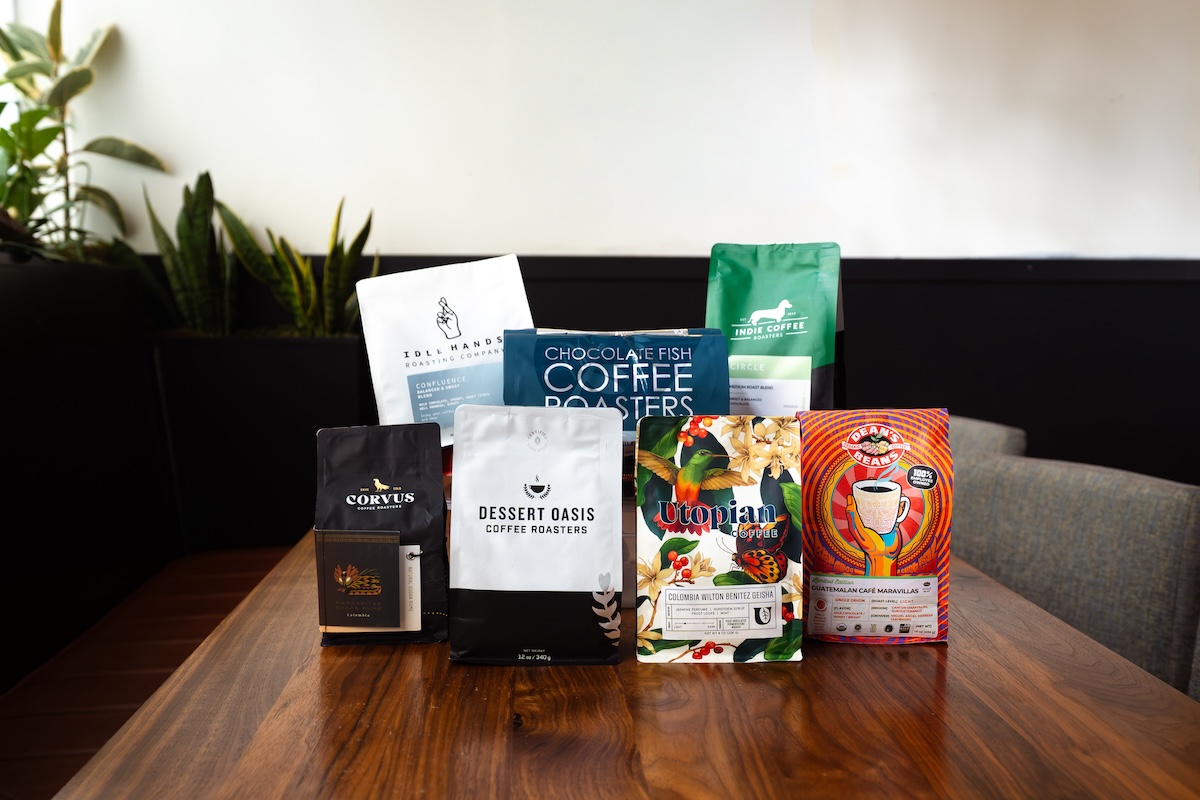
Roast magazine is thrilled to announce the finalists for the 23rd Annual Roaster of the Year awards!
The Micro Roaster category includes companies roasting less than 100,000 pounds of coffee each year, and the Macro Roaster category includes companies roasting more than 100,000 pounds annually. The award winner in each category will be announced on Monday, Oct. 19, and featured in the November/December 2026 issue of Roast magazine.
The Roaster of the Year awards recognize companies that roast coffees of excellent quality, exemplify a dedication to sustainability, promote employee and community education, demonstrate strong involvement in the coffee industry, and a commitment to diversity, inclusion and equity, among other criteria. To view the award criteria and application for the 2028 Roaster of the Year competition, click here.
Micro Roaster of the Year Finalists
The finalists in the Micro Roaster category are listed below in alphabetical order, with information obtained from each company’s award application. (There are four finalists due to a tie in the first round of judging.)
 Chocolate Fish Coffee Roasters
Established in Sacramento, California, in 2008, Chocolate Fish Coffee Roasters is a roaster-retailer and wholesaler producing approximately 93,665 pounds of coffee annually. Owned by Ali Syed and Asif Alvi, the company operates six brick-and-mortar locations across Sacramento and the East Bay, two licensed locations, and supplies nearly 70 stores through its wholesale partners. Chocolate Fish centers its mission on making coffee approachable through education, accessibility and community engagement. Its sustainability efforts include composting coffee grounds and filters, reusing green coffee packaging, offering compostable products, and partnering with food-rescue programs. Since 2014, the company has donated more than 200,000 pounds of compostable materials to help divert organic waste from landfills. Education is central to its operations, with structured barista training, ongoing wholesale-partner support, public coffee classes and an in-house education lab. In roasting, Chocolate Fish uses infrared-burner equipment and manually adjusts gas, airflow, temperatures and roast times to refine profiles for individual coffees, including experimentally processed lots that challenge its team to adapt roasting approaches. Its community involvement spans local organizations, schools, environmental initiatives and coffee-industry events, reflecting its commitment to building connections through coffee.
 Dessert Oasis Coffee Roasters
Founded in 2009, Dessert Oasis Coffee Roasters (DOCR) is a Michigan-based roaster-retailer and wholesaler roasting approximately 68,000 pounds of coffee annually. Led by owner, president and director of coffee Nathan Hamood, the company operates four retail locations in Rochester, Royal Oak, Ferndale and Detroit, supported by a 9,000-square-foot Ferndale headquarters housing its roastery, bakery, distribution operations, quality control and training center. DOCR emphasizes thoughtful sourcing and long-term purchasing relationships with producers and exporters, alongside sustainability initiatives that include electric-vehicle deliveries, coffee-waste reuse, bulk coffee options and food-waste reduction. The company also invests in employee benefits, career development and a dedicated Education Department that provides structured training for staff, wholesale partners and the broader coffee community. Its commitment to industry engagement includes public coffee classes, support for employees attending industry events, and involvement in community education initiatives such as Detroit Coffee Week. In roasting, DOCR focuses on careful profiling, weekly production cuppings and consistency, using Probat profiling software to support quality control and highlight each coffee’s best qualities.
 Idle Hands Roasting Co.
Established in Salt Lake City, Utah, in 2021, Idle Hands Roasting Co. is a roaster-retailer and wholesaler producing approximately 85,000 pounds of coffee annually. Founded by Adrian Bradshaw Tezjan, Ricky Dyson and Peter Jones, the six-person company centers its business on transparency, long-term producer relationships and measurable impact throughout the coffee supply chain. Idle Hands publishes its sourcing and pricing information and releases an annual Responsibility Report detailing its purchasing practices, environmental efforts and progress toward sustainability goals. Its producer partnerships have supported projects including a community water initiative in El Salvador, coffee seedling donations in Guatemala and milling equipment for a Colombian producer. The company roasts more than 90% of its coffee on a Loring S35 Kestrel and uses weekly quality-control cuppings, roast-color tracking and Cropster production data to maintain consistency and traceability. Beyond its roasting operations, Idle Hands invests in employee development, wholesale training and public coffee education, while supporting organizations including World Coffee Research, the Specialty Coffee Transaction Guide and Raise the Bar. The company also serves the broader industry through its involvement with the Alliance for Coffee Excellence and international coffee competitions. Its approach reflects a central mission: to leave coffee better than it found it through greater transparency, producer collaboration and shared industry knowledge.
 Indie Coffee Roasters
Founded in 2018 by Diane and Kevin McAndrews, Indie Coffee Roasters is a Carmel, Indiana-based roaster-retailer and wholesaler producing 47,386 pounds of coffee annually across five locations. Guided by its “Love What You Drink” mission, the company focuses on making specialty coffee welcoming and accessible through approachable roast profiles, hospitality, and education. Its signature Circle and Silhouette blends emphasize sweetness, balance, body, and drinkability, while rotating single origins and seasonal releases invite customers to explore a wider range of coffees. Indie Coffee Roasters invests in long-term sourcing relationships, including partnerships with underrepresented communities and producers pursuing regenerative practices. Its sustainability efforts include composting coffee grounds, repurposing green coffee packaging in roastery gardens, expanding reusable-cup incentives, and introducing low-impact alternatives to single-use cups. The company also prioritizes employee development through professional education reimbursements, personalized growth plans, and shared ownership opportunities. Daily production cuppings, Cropster roast-curve tracking, and sample roasting with an Ikawa support quality and consistency, while free wholesale training, public cuppings, and community events extend its educational mission beyond its cafes. Through collaborative projects with producers and local coffee businesses, Indie Coffee Roasters works to strengthen relationships throughout the supply chain and create a specialty coffee community where more people feel they belong.
Macro Roaster of the Year Finalists
The three finalists in the Macro Roaster category are listed below in alphabetical order, with information obtained from each company’s award application.

Corvus Coffee Roasters
Founded in Denver in 2010, Corvus Coffee Roasters is a roaster-retailer and wholesaler producing 254,200 pounds of coffee over the past 12 months. With six retail locations and a dedicated roasting, quality control, and training facility, the company centers its work on relationship-driven sourcing, technical precision, and producer storytelling. Corvus builds long-term partnerships with farmers, structuring prices around cup quality, processing complexity, and relationship history. These relationships support producer investment in new processing methods and quality improvements, including a decade-long partnership with Colombia’s Finca San Pedro that has helped expand its anaerobic fermentation program. Corvus applies the same attention to detail in roasting, developing individual profiles for each coffee and tracking more than 15 variables through a combination of Cropster data and roaster observations. The team blind-cups every roast weekly and conducts dedicated research and development for more than 100 microlot releases annually. Education is central to the company’s operations, with paid onboarding, monthly staff cuppings, free training for wholesale partners, public classes, and detailed brewing recipes and dial-in guides for each coffee. Corvus also supports employee advancement, coffee competition participation, and origin travel for eligible long-term team members. Through its packaging, educational programming, and producer-focused events, the company works to connect customers with the people and practices behind each coffee.
 Dean’s Beans Organic Coffee
Founded in 1993 by Dean Cycon, Dean’s Beans Organic Coffee is an Orange, Massachusetts-based roaster-retailer and wholesaler producing 499,675 pounds of coffee annually. Built around its mission to use specialty coffee as a vehicle for positive change, the company directly sources certified organic, Fair Trade coffee from 11 partner cooperatives, many of which it has worked with for decades. Through its People-Centered Development program, Dean’s Beans supports farmer-led social, environmental, and economic initiatives, including agroforestry, reforestation, and organic fertilizer production. In 2023, the company became a 100% worker-owned cooperative, with 13 of its 15 employees participating in ownership and shared governance. Sustainability also shapes its Massachusetts roasting facility, which is solar-powered and equipped with two 70-kilogram Loring Smart Roasters that reduce fuel consumption and roasting emissions. The company uses Cropster to monitor roast profiles and consistency while collaborating with producers on experimental lots and limited-edition coffees. Its commitment to education includes origin visits, employee development, wholesale training, and customer webinars on topics such as coffee pricing and sustainability. Dean’s Beans also contributes purchasing data to the Specialty Coffee Transaction Guide and supports industry organizations advancing equity and women’s leadership. With long-term purchasing agreements, transparent business practices, and a focus on keeping responsibly sourced coffee accessible, the company continues to connect quality roasting with positive change throughout the coffee supply chain.
 Utopian Coffee
Established in 2006 by cousins Brendon Maxwell and Patrick Smith, Utopian Coffee is a Fort Wayne, Indiana-based roaster-retailer and wholesaler producing 987,946 pounds of coffee annually. Guided by a mission to make life better for farmers, employees, customers, and the community, the company combines long-term producer relationships with a commitment to regenerative agriculture. Utopian has purchased more than 1 million pounds of Regenerative Organic Certified coffee and works with producer partners on practices that support soil health, biodiversity, and farmer livelihoods. Its sustainability efforts extend to its 30,000-square-foot roastery, where the team composts coffee and food waste, recycles, reuses chaff and burlap, and collaborates with local organizations to reduce waste and create community benefits. In roasting, Utopian applies detailed profiling across the spectrum, from experimental, lightly roasted microlots to its Regenerative Organic Certified Obsidian dark roast. Green coffee screen grading and UV inspection also help the team assess quality and share actionable feedback with producers. As the company scales, it has redesigned production workflows, established clearer employee advancement tiers, and developed standard operating procedures with input from production staff. A dedicated coffee lab supports team development, customized wholesale training, public education, and stronger connections throughout the supply chain.
Comments? Questions? News to share? Contact DCN’s editors here. For all the latest coffee industry news, subscribe to the DCN newsletter.
Related Posts

Comment