



A water catchment tank undergoing repairs at Kanalani Ohana Farm in Hawaii’s Kona region. Images courtesy of Kanalani Ohana Farm.
Only two months after back-to-back Kona low storms resulted in an estimated $40 million in damage to agricultural lands across Hawaii, a 6.0-magnitude earthquake in South Kona damaged water catchment systems throughout the Kona coffee belt on May 22, leaving many farmers and residents without access to water for homes or crops.
The disaster complicates an already daunting crop year for many farmers who are dealing with other natural threats such as coffee leaf rust and coffee berry borer alongside climbing production costs.
More than 7,000 “Did You Feel It?” reports were submitted to the U.S. Geological Survey (USGS) following the earthquake, which struck the west side of the Island of Hawaii just south of Hōnaunau-Nāpōʻopoʻo. That total set a new state record for DYFI reports, underscoring how widely the quake was felt across Hawaii.
Farm Operations Disrupted
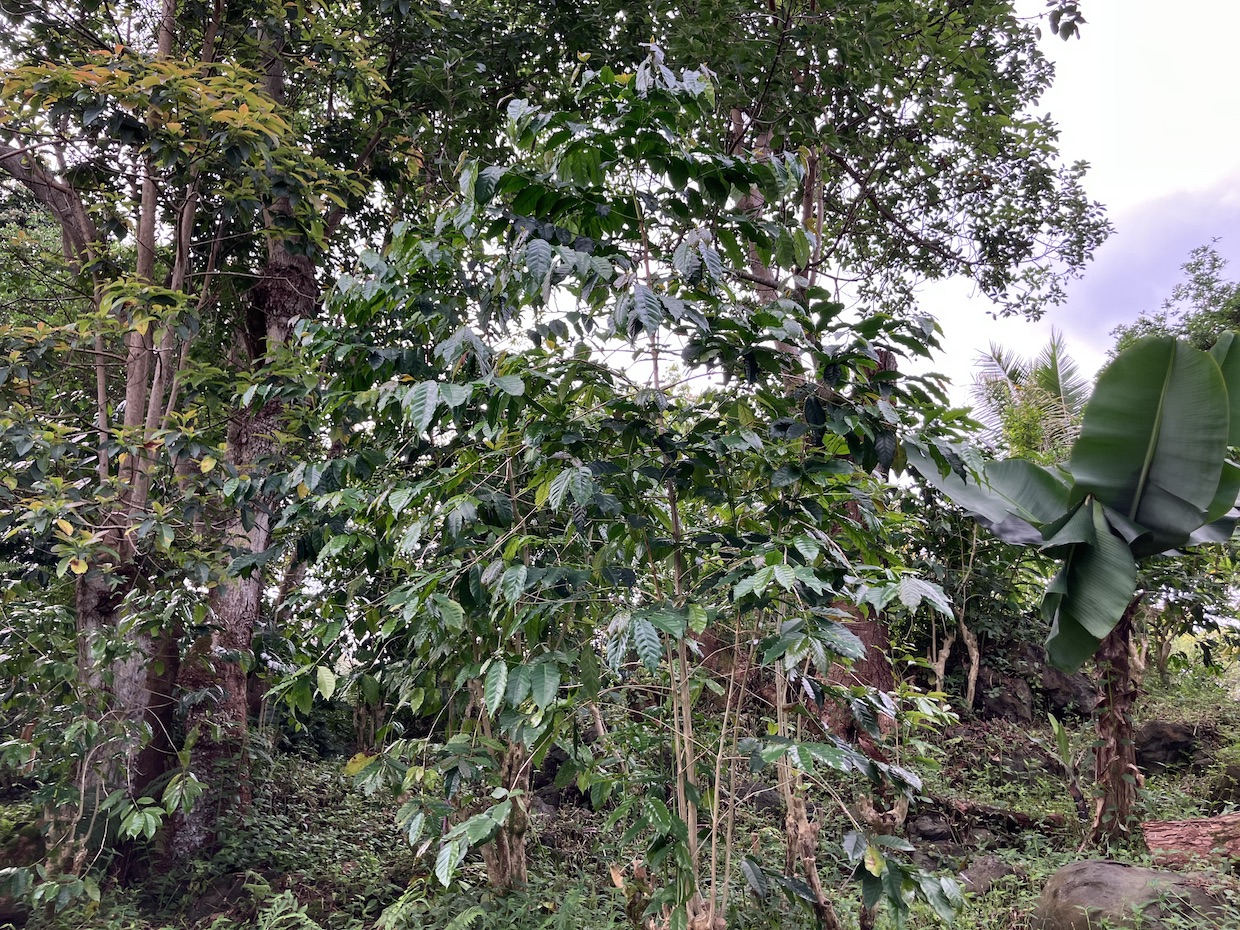
Among the people feeling the earthquake were Colehour and Melanie Bondera, who have been operating Kanalani Ohana Farm in Honaunau since 2001, growing and roasting their own Kona coffees. To combat the worsening impact of coffee berry borers and leaf rust — which was first identified on the island of Hawaii in 2020 — they intercrop coffee with avocados, cacao and other fruits.
As was the case at many neighboring farms, the recent earthquake damaged the farm’s water catchment system, with repairs to a tank’s lining taking nearly two weeks.
At Kanalani Ohana Farm.
“We now need to build from scratch a roof for the water tank,” Colehour Bondera said. “We do not have the money to invest in making that happen.”
The Bonderas said they requested assistance through insurance, although earthquake damage was not covered by their policy. The farmers said they also need to rebuild the front porch of their home, and that all these projects combined are taking time away from the regular seasonal duties of the busy farm.
“Neighbor farms are doing the same or worse,” Colehour Bondera said. “Many farms also lost water tank liners or even complete tanks; however, there is not enough labor to deal with the demand, and the County and State are not helping with immediate labor needs to get operations back to pre-earthquake capacity.”
The best option now, Bondera said, is for neighboring farms to help one another.
Regional Damage and Resources
The Bonderas and their neighbors are not alone. University of Hawaii guidance estimates that 30,000 to 60,000 people in Hawaii depend on rainwater catchment systems.
In a post-quake emergency proclamation, Hawaii County said Civil Defense had received 207 damage reports concentrated in Kaʻū, North Kona and South Kona, including damage to residential, commercial and agricultural water catchment systems.

Kanalani Ohana Farm grows organic Kona coffee intercropped with other fruits.
Honolulu Civil Beat reported on May 27 that as many as 500 residents in the Kona coffee belt had lost their primary sources of water and were relying on trips to county spigots.
A June 1 Hawaii News Now report said nearly 90 homes had sustained significant damage, while seven homes had been destroyed or had collapsed. Officials noted that damage assessments were still ongoing, and later reporting said repair costs for some damaged water systems and related property damage could reach tens of thousands of dollars.
The Hawaii Coffee Association sent out a bulletin on May 31 with links to numerous resources for immediate and long-term assistance. The group urged affected farmers to file damage reports with the Hawaii County Civil Defense Agency. Additionally, farmers were encouraged to report catchment tank losses to the USDA Farm Service Agency through its Emergency Conservation Program (ECP). The ECP can provide cost-share assistance of up to 75% of allowable costs for approved conservation practices, or up to 90% for qualifying limited-resource producers.
The Kona Coffee Farmers Association has also published a list of resources for assistance, access to grants and disaster aid.
“Well… if anyone needed proof that Kona farmers are made of tougher stuff than our rocky soils, the past few weeks certainly delivered it,” Kona Coffee Farmers Association President Mark Petersen wrote. “First, the Kona Low tried to wash us into the ocean, and then the earth itself decided to give South Kona a good shake — just to make sure we were paying attention. If your nerves are still rattled, you’re in excellent company.”
Comments? Questions? News to share? Contact DCN’s editors here. For all the latest coffee industry news, subscribe to the DCN newsletter.
Related Posts
Daria Toptygina
Daria Toptygina is a freelance writer, avid coffee lover and social media manager of Daily Coffee News by Roast Magazine.



Comment