


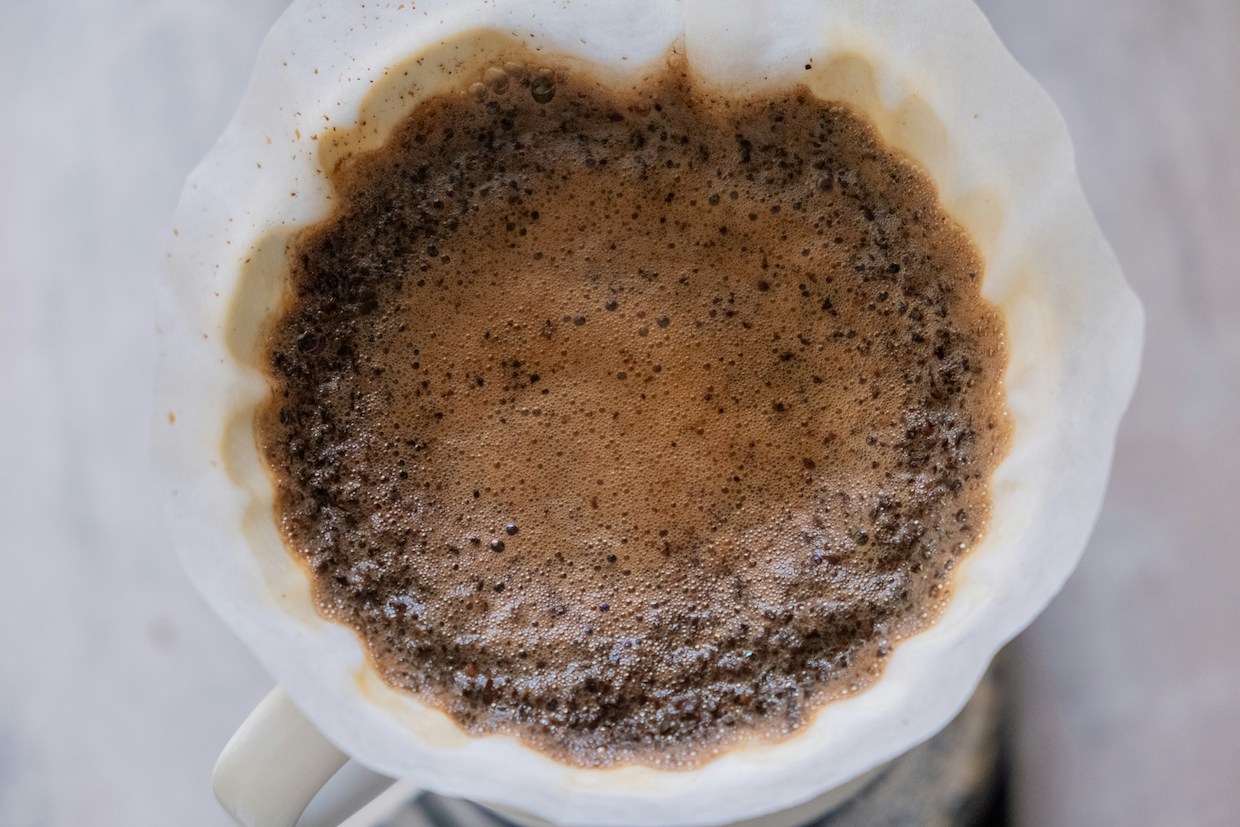
Spent coffee grounds may have another industrial use beyond filtering water, reducing plastic in plastic wrap, improving cucumbers or strengthening concrete.
A recent study in the journal Biochar says they could be converted into a porous, nitrogen-rich biochar catalyst that removes hydrogen sulfide — a toxic gas common in some industrial waste streams — while converting it into elemental sulfur.
Hydrogen sulfide is both a health hazard and an industrial nuisance, generated in settings such as petroleum cracking, wastewater treatment and the iron industry, where it can corrode equipment, poison other catalysts and contribute to acid rain.
Trace concentration of the stuff, which is often associated with a “rotten egg” smell, can stimulate the olfactory and nervous systems, while acute exposure at high concentrations can trigger immediate respiratory arrest. The paper notes that acceptable environmental limits are generally in the range of 0.02 to 0.1 ppm.
The China-based research team behind the paper suggests that used coffee grounds, when transformed into biochar, could provide a more sustainable alternative to traditional hydrogen sulfide treatment approaches, which can involve residual emissions, spent adsorbents or sulfur-laden waste streams.
In lab tests simulating industrial stressors, including humidity and high carbon dioxide concentrations, the optimized catalyst achieved more than 99% hydrogen sulfide conversion, with nearly 100% sulfur selectivity. Elemental sulfur has agricultural and industrial uses of its own.
The work fits into a growing body of research treating spent coffee grounds not as waste but as raw material.
DCN recently covered Loughborough University work turning grounds into biosorbents for heavy metal removal from contaminated water and a University of Sharjah study using grounds and plastic bottles to produce carbon filters. The International Coffee Organization’s most recent Coffee Development Report also highlighted circular economy approaches to coffee waste as a policy priority.
Statistics cited in the study say more than 6 million tons of spent coffee grounds are generated globally each year, with more than half going directly to landfill or incineration, contributing to methane-releasing decomposition and increased carbon dioxide emissions.
Meanwhile, dried coffee grounds are roughly 70% carbon by weight, making them an economical, widely available feedstock for activated carbon materials.
The paper lists Fei Zhao and Zibin Pan of Yunnan Minzu University as equal contributors. Corresponding authors were Jiayu Feng and Lijuan Jia of Yunnan Minzu University and Ping Ning of Kunming University of Science and Technology.
The research was funded by the Yunnan Fundamental Research Projects and the National Natural Science Foundation of China. No conflicts of interest were declared.
Comments? Questions? News to share? Contact DCN’s editors here. For all the latest coffee industry news, subscribe to the DCN newsletter.
Related Posts


Comment