


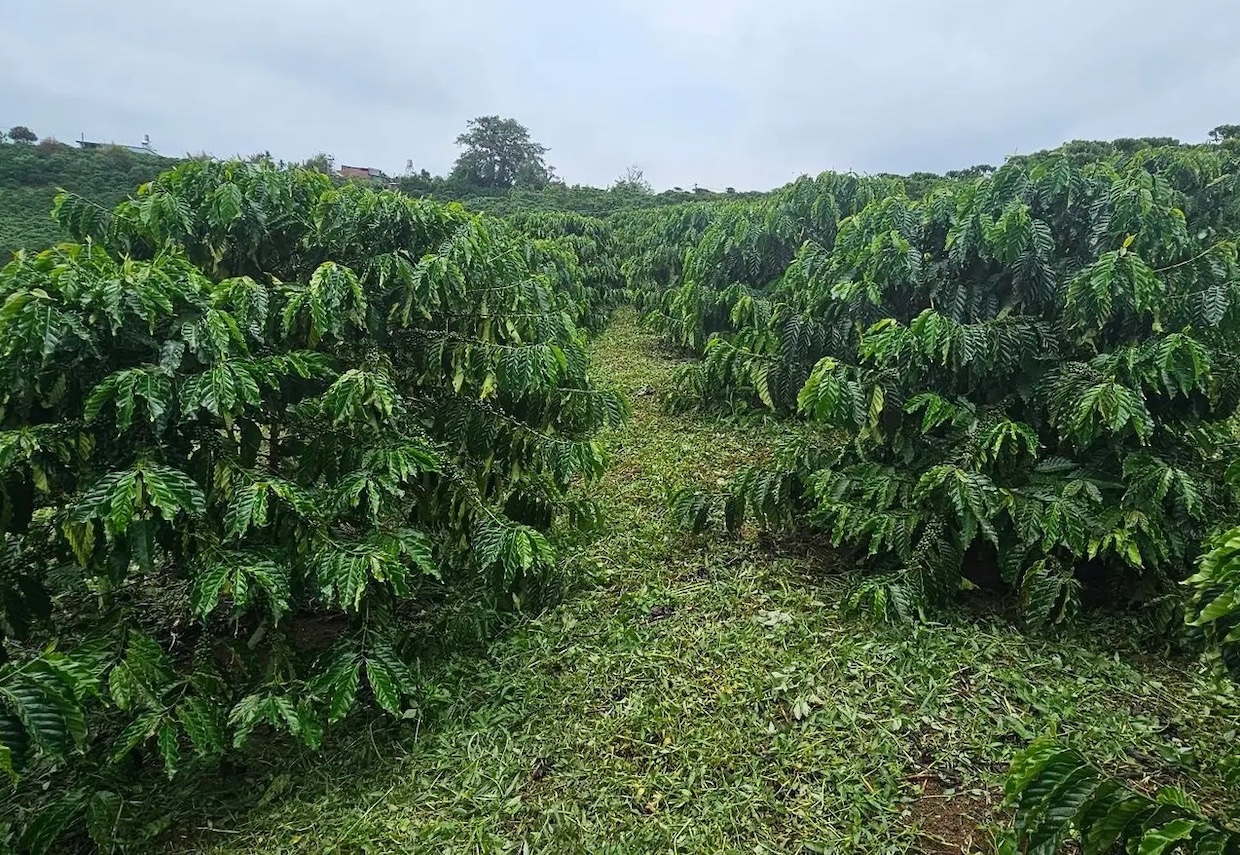
UCC Japan Co., Ltd. press release photo.
Japanese coffee giant UCC is launching a regenerative coffee pilot program in Vietnam, testing whether farm practices such as shade planting, cover cropping and biochar-based compost can improve coffee-tree growth and yields while reducing environmental impacts.
The project is being conducted with Atlantic Commodities Vietnam Ltd., or Acom, the Vietnam subsidiary of multinational green coffee company Ecom. UCC described Acom as one of its sustainable coffee sourcing partners, with existing farmer and agricultural support networks.
The companies plan to establish pilot farms with the overarching goals of boosting tree growth and yields, reducing dependence on chemical fertilizers and helping better withstand climate stress.
The project does not yet appear to be tied to large-scale green coffee sourcing. UCC did not announce targets for farmer participation, investment or green coffee volumes, although the company said 1,757 shade-tree seedlings had already been distributed to 38 farmers.
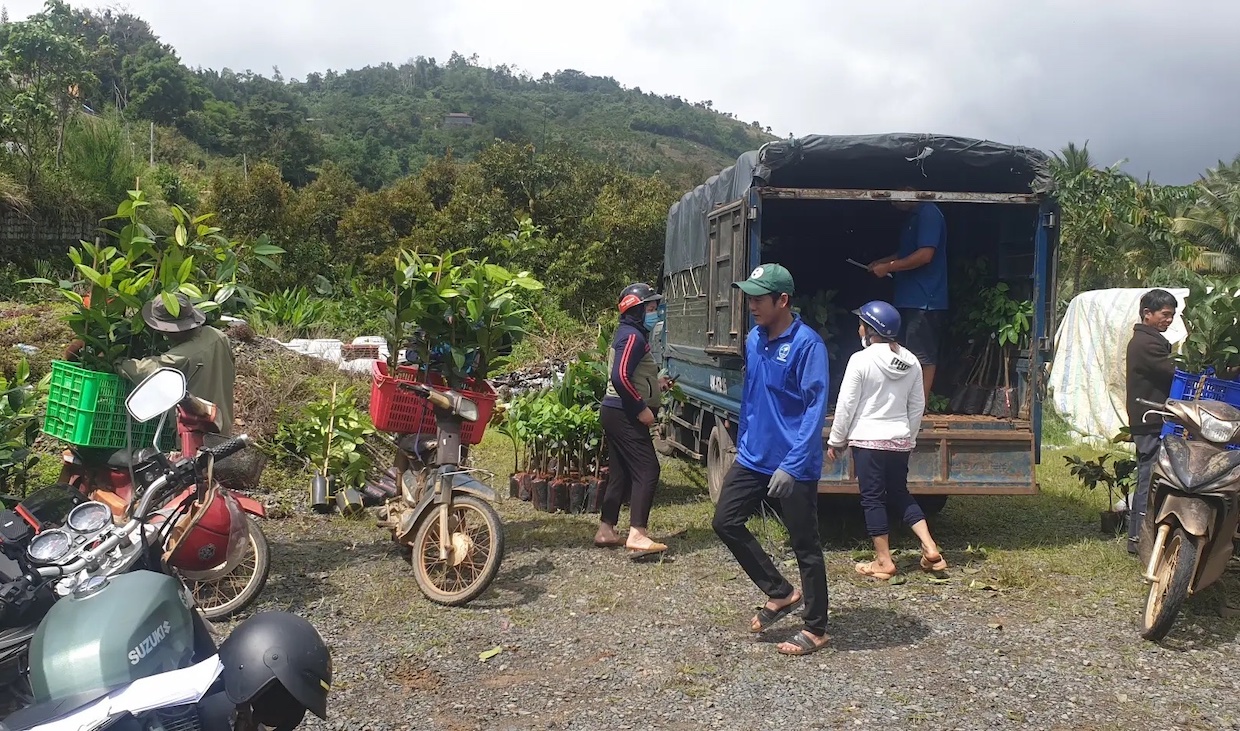
UCC Japan Co., Ltd. press release photo.
In a Japanese-language announcement, UCC said findings from the pilot will be shared with local producers with the goal of improving resilience across the region.
The pilot is part of UCC’s broader sustainability goals. The company says it is working toward 100% sustainable sourcing for its own brands of coffee products by 2030, while aiming for carbon neutrality by 2040. UCC has identified Vietnam as one of four priority coffee-producing countries for deeper sustainability engagement, alongside Brazil, Tanzania and Uganda.
Vietnam is the world’s largest robusta producer and the second-largest coffee-producing country overall, making it a key origin for large commercial roasters. DCN recently reported that Vietnam’s green coffee production is forecast to rise to 32.5 million 60-kilogram bags in market year 2026/27, following a period of high prices.
Yet Vietnam’s coffee sector is also under pressure from rising temperatures, shifting rainfall, declining soil health and rising production costs. A recent report from the watchdog group Coffee Watch argued that the country’s volume-driven coffee model has contributed to deforestation and soil degradation throughout the Central Highlands, with environmental and social costs.
The UCC pilot also comes as major coffee buyers face growing expectations around traceability, deforestation-free sourcing and supply-chain emissions.
Comments? Questions? News to share? Contact DCN’s editors here. For all the latest coffee industry news, subscribe to the DCN newsletter.
Related Posts



Comment