



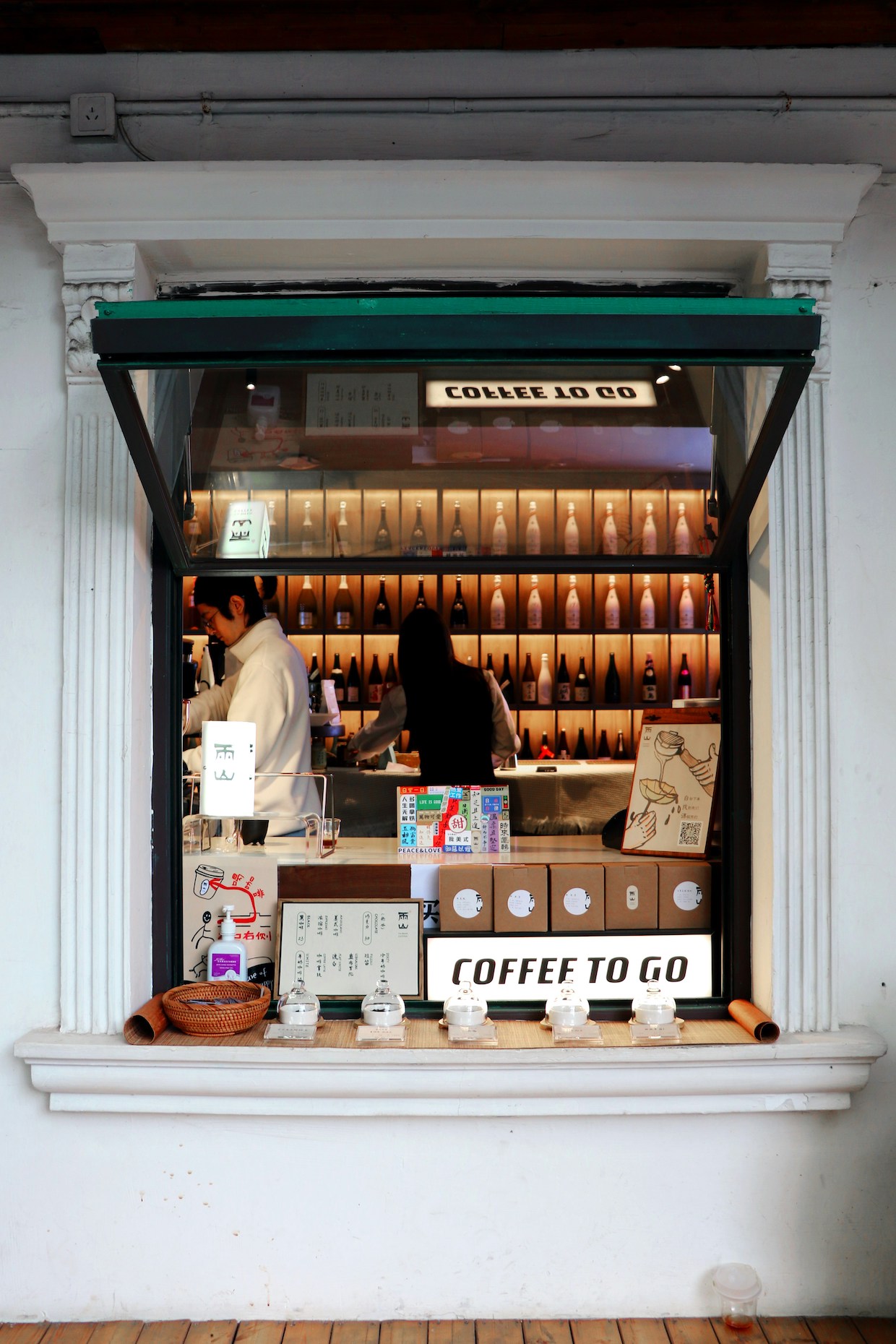
A busy coffee shop in Shanghai. Unsplash photo.
Shanghai’s rapidly evolving coffee market could have global consequences as demand grows for high-quality, differentiated coffees, according to a new U.S. Department of Agriculture Foreign Agricultural Service (FAS) report.
The report identifies Shanghai as both a leading coffee-consuming city and a critical gateway for green coffee entering China. It also describes a notable change in the Chinese domestic coffee market, as retailers move away from the aggressive price wars of recent years toward greater emphasis on quality, coffee origin and craft.
Given the relatively static output of green coffee globally, the report adds fuel to the idea that China’s enormous consumer market is intensifying competition between more established markets for specialty coffee, such as North America and Europe.
Moving Beyond Coffee Price Wars
Citing the 2026 China Urban Coffee Development Report, FAS said Shanghai counted 10,336 coffee shops in 2025, up from 6,193 in 2021. “Specialty coffee” shops represented 18% of the total, while estimated annual coffee consumption reached 106 cups per person, compared with a national average of 29.
The city remains a fiercely price-sensitive market. From 2023 through 2024, Chinese giants Luckin Coffee and Cotti Coffee helped drive a price war through coupons that routinely brought drinks to RMB 9.9, or about $1.47, according to FAS.
However, since 2025, low-cost sellers have reduced the frequency of steep discounts while higher-priced chains and independent specialty shops have maintained their positions, according to the FAS report. The agency described purchasing decisions as increasingly based on “product quality and overall value,” including coffee origin, preparation method and other differentiated product characteristics.
A Growing Destination for Green Coffee
A broader FAS report on the Chinese coffee market, released in January, provides additional evidence that the shift is reaching upstream into green coffee.
China imported 181,243 metric tons of unroasted coffee valued at $837 million in 2024, according to that report. Import volume was up 218% from 2020, with Brazil, Colombia, Ethiopia and Vietnam leading as suppliers. The report similarly noted an increased demand for traceable single-origin arabica coffees.

Shanghai.
Coffee-producing countries appear to be responding.
Ethiopia’s coffee exports to China jumped 264% in the 2024/25 market year, making China the country’s third-largest coffee destination after ranking 17th a decade earlier, according to FAS data reported by DCN in June.
Brazil has also been building dramatically stronger coffee ties with China. Amid steep U.S. tariffs on Brazilian goods last year, Chinese authorities authorized trade with 183 new Brazilian coffee exporters. That followed a massive agreement in which Luckin committed to purchasing 240,000 metric tons of Brazilian green coffee between 2025 and 2029.
Shanghai as a Coffee Hub
The new FAS report also illustrates how the infrastructure surrounding Shanghai is accommodating substantially more coffee.
The Port of Shanghai accounted for 28% of the value of China’s green coffee imports in 2025, according to Chinese customs data cited by FAS. Shanghai and neighboring Jiangsu province together accounted for 52%.
About 25 miles west of Shanghai, Kunshan has developed into a major roasting and logistics center. FAS said the city’s roasted coffee output exceeded 180,000 metric tons in 2025, representing approximately 60% of national production, while more than 40 international coffee companies have established operations there.
Starbucks opened its $220 million Coffee Innovation Park in Kunshan in 2023, followed by Luckin’s $120 million roasting plant the following year. Global green coffee trader Neumann Kaffee Gruppe also established its first Chinese trading company in Shanghai in 2024, supported by warehouses in Kunshan and Yangshan.
Comments? Questions? News to share? Contact DCN’s editors here. For all the latest coffee industry news, subscribe to the DCN newsletter.
Related Posts



Comment