


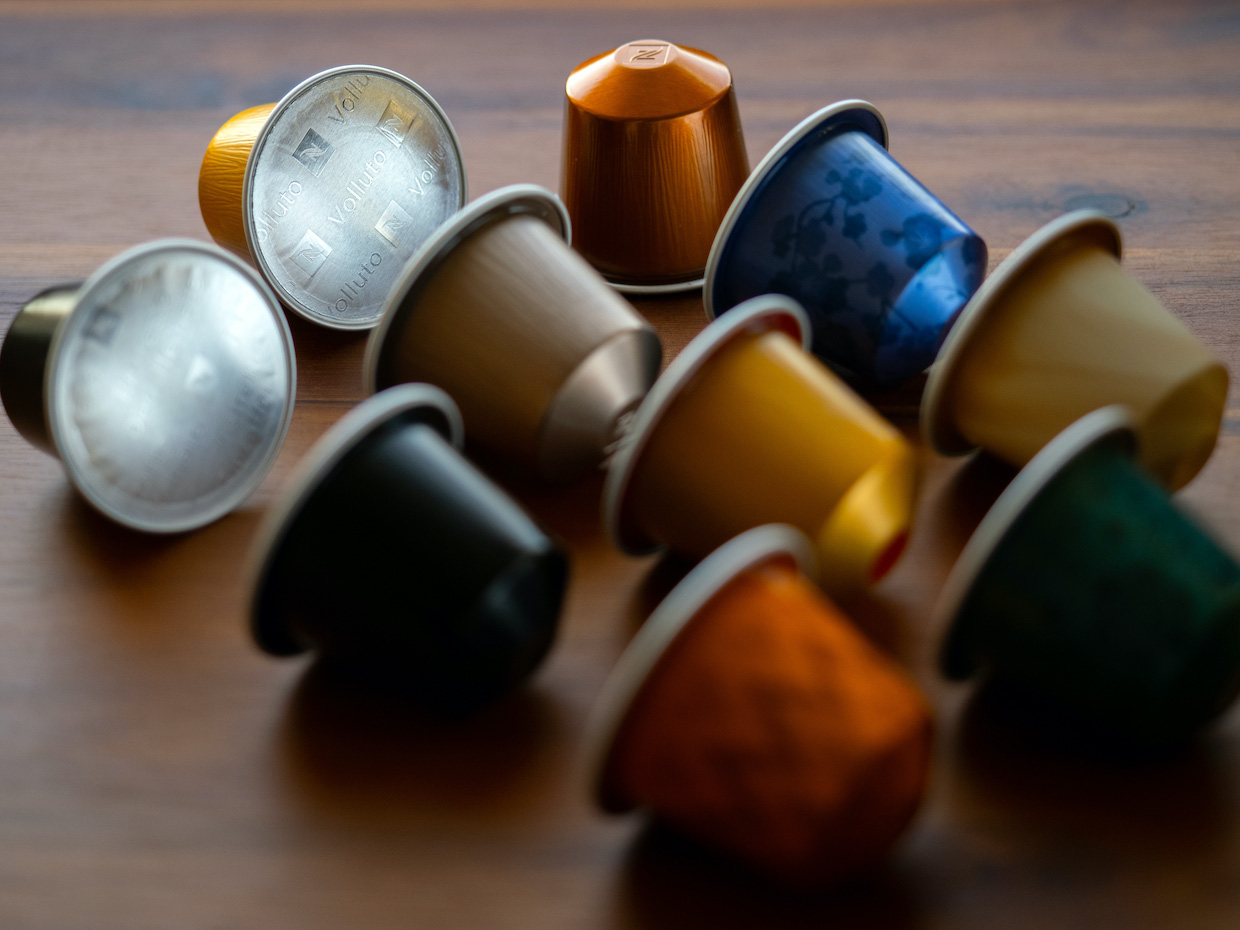
Nespresso aluminum coffee capsules. Photo by Andrzej Barabasz, via Wikimedia Commons, licensed under CC BY-SA 4.0
Nestlé-owned coffee giant Nespresso is discontinuing its paper-based, home-compostable coffee capsules, abandoning a packaging innovation rolled out in 2023 as an alternative to the company’s aluminum single-use capsules.
The Swiss company confirmed the decision in late September, citing consumer feedback regarding limited shelf life and the overall product experience, according to a Swiss Broadcasting Corporation report.
In an updated online FAQ, Nespresso said it will focus on aluminum capsules moving forward, arguing that aluminum remains the better material for preserving coffee quality.
“We have carefully analyzed customer feedback and are now more convinced than ever that aluminum is the best choice for preserving the taste and aroma of Nespresso coffee,” the company stated.
The decision ends a product initiative that followed three years of research and development and eventually reached 14 European markets. Nespresso is discontinuing the capsules, while Swiss media reported that some remaining compostable inventory was still available in Swiss Nespresso boutiques in late September.
Nespresso unveiled the capsules in November 2022, announcing plans for an initial rollout in France and Switzerland in spring 2023. Compatible with existing Nespresso Original machines, the capsules were developed in partnership with Finnish packaging manufacturer Huhtamaki and Nestlé’s in-house packaging research arm.
Made primarily from molded paper pulp with a thin biodegradable lining designed to protect the coffee from oxidation, the capsules were certified for home and industrial composting by TÜV Austria.
The reversal comes as coffee equipment and packaging companies continue exploring alternatives to conventional single-use capsules. Recent introductions include Lavazza’s plastic-free Tablì coffee tablets.
Meanwhile, a 2023 Wageningen University & Research study highlighted environmental trade-offs among compostable bioplastic, recyclable aluminum and conventional plastic capsules. The researchers concluded that the compostable bioplastic capsules represented the most sustainable option when greenhouse gas emissions and material circularity were considered together. Aluminum showed substantial circularity potential when collected through dedicated recycling systems, although low participation rates remained a major obstacle.
For many conventional recycling systems, single-use coffee capsules remain problematic because their small size can make them difficult to sort, while residual coffee grounds must be separated from recyclable materials.
Comments? Questions? News to share? Contact DCN’s editors here. For all the latest coffee industry news, subscribe to the DCN newsletter.
Related Posts
Nick Brown
Nick Brown is the editor of Daily Coffee News by Roast Magazine.


Comment