


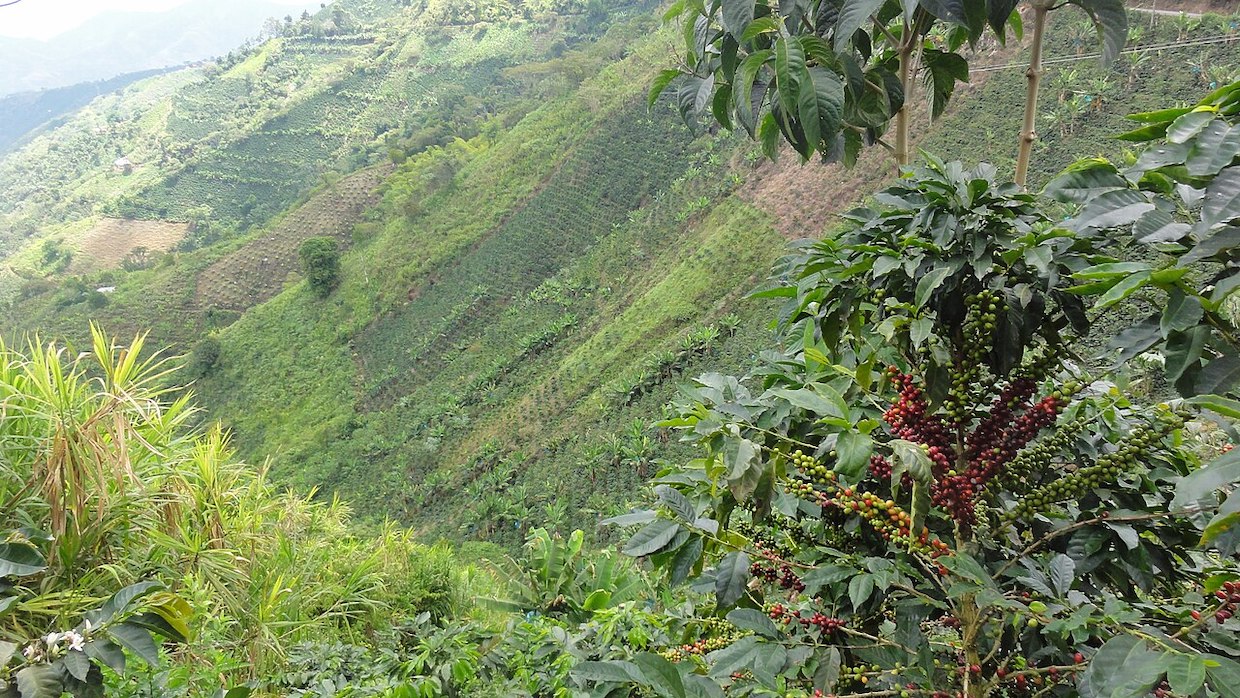
A pre-earthquake coffee-growing landscape near El Águila, Valle del Cauca. Photo by Hoako/Wikimedia Commons, CC BY-SA 3.0.
A magnitude 7.4 earthquake shook coffee-growing regions of western Colombia on Monday, killing at least 250 people, while damage assessments are ongoing.
The quake hit at 7:34 a.m. local time Monday, Aug. 10, with an epicenter near San José del Palmar in the rural Chocó department, west of Bogotá, according to the U.S. Geological Survey.
News outlets have reported severe damage to buildings and infrastructure throughout neighboring coffee-producing areas, with Reuters reporting at least 254 deaths as of Tuesday morning, including 101 in Pereira, the capital of the major coffee-producing department of Risaralda.
Damage has been reported in and around the Eje Cafetero — the departments of Caldas, Risaralda and Quindío — as well as Valle del Cauca, Antioquia and Chocó.
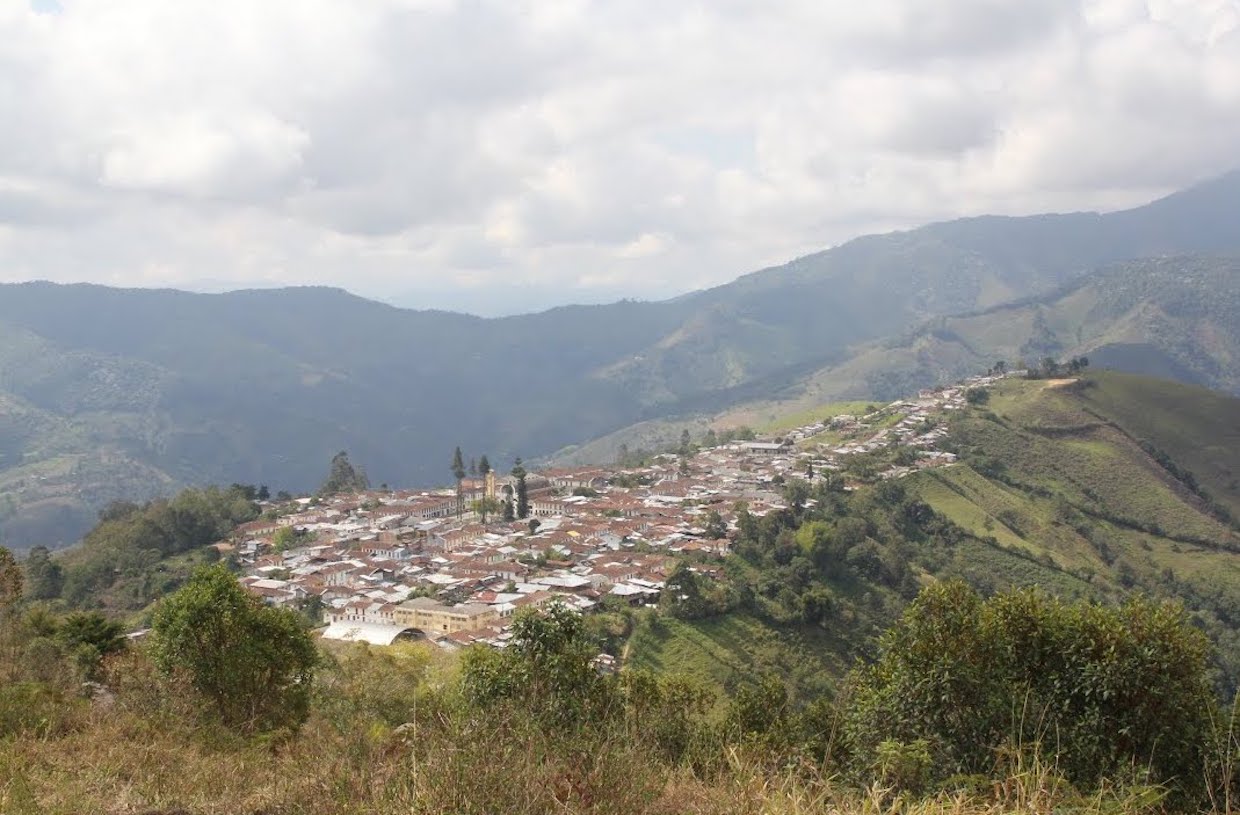
A pre-earthquake view of El Cairo, Valle del Cauca. Photo by Herrero Enrique/Wikimedia Commons, CC BY-SA 4.0.
Germán Bahamón, general manager of the Federación Nacional de Cafeteros de Colombia (FNC), said on social media that the organization was working directly with coffee-growing communities to assess damage to farms and rural infrastructure. No comprehensive coffee-sector damage figures have yet been released.
“Today, the priority is saving lives,” Bahamón wrote on X (translated from Spanish).
According to a report from La República, the FNC’s director of social development, Guillermo Arcila, is leading a household-by-household damage assessment carried out with the federation’s technical team, departmental committees and extension service, assessing harm to homes and coffee infrastructure.
Gustavo Gómez, president of the Colombian coffee exporters’ association Asoexport, told Bloomberg that coffee exports are “currently paused,” with landslides and blockages — including around tunnels on the Cali-Buenaventura highway — disrupting access to Buenaventura, the country’s main coffee port.
Oliver Broster, senior manager for coffee analysis at commodity pricing company Expana, told the Financial Times that the route carries approximately 60% of Colombia’s coffee exports and that the extent of the disruption was still being assessed.
Alejandro Cadena, the co-founder and CEO of specialty green coffee exporter Caravela Coffee, said on LinkedIn that the company’s dry mill in Armenia, Quindío, suffered some damage and was being temporarily shut down as a precaution.
“Some of our colleagues suffered damage to their homes, but thankfully no one was seriously injured, and we did not lose any members of our team or their families,” Cadena wrote, adding, “Colombia has faced difficult moments before, and we know the strength, solidarity, and resilience of our communities. We will recover from this.”
(Note: This story is developing. DCN has reached out to numerous organizations involved in the Colombian coffee sector and will update this story as needed. If you have information to share regarding damage assessments or relief efforts, contact our editors here.)
Comments? Questions? News to share? Contact DCN’s editors here. For all the latest coffee industry news, subscribe to the DCN newsletter.
Related Posts
Nick Brown
Nick Brown is the editor of Daily Coffee News by Roast Magazine.



Comment