


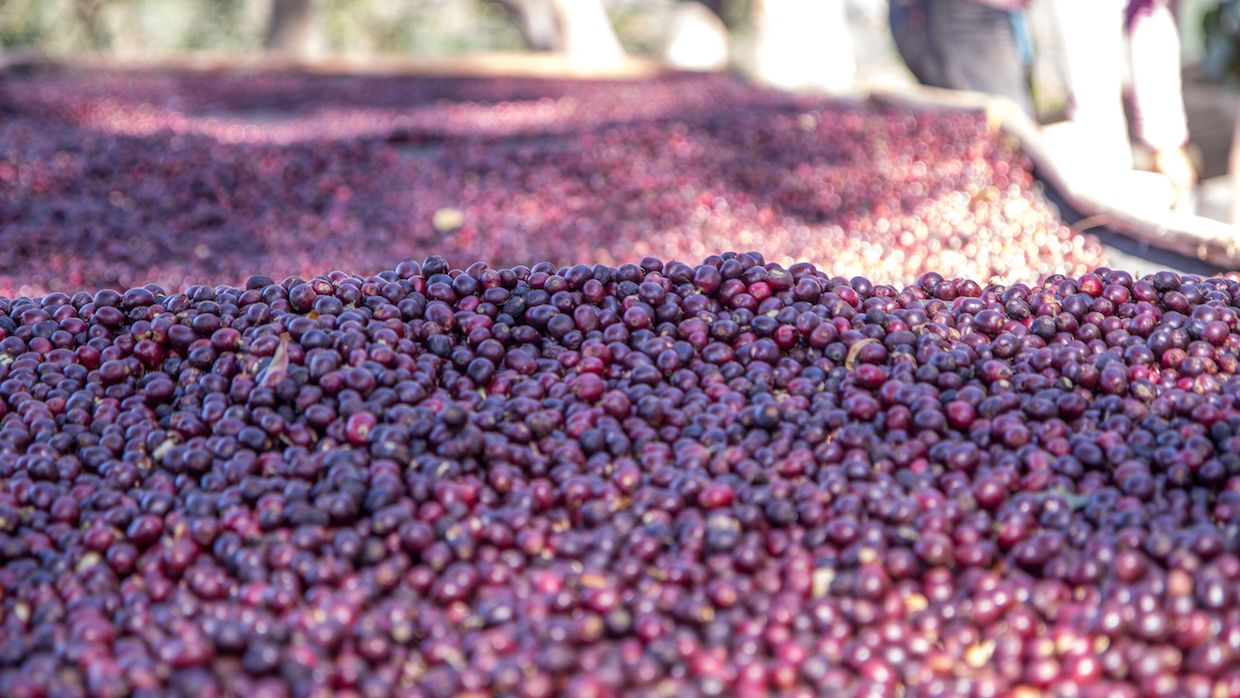
A new study from China adds more scientific credence to the idea that post-harvest processing can dramatically influence the characteristics and quality found in the cup.
The study specifically focused on anaerobic fermentation, finding that when it was paired with dry/natural processing, it significantly changed the chemical makeup of green coffee from Yunnan, China. More importantly for practical applications, the anaerobically fermented coffees scored higher than conventionally processed coffees across several sensory attributes.
Published July 7 in the open-access journal Beverage Plant Research, the study focused on Catimor arabica from Baoshan, Yunnan, the province that accounts for nearly all of China’s coffee production.
The paper, titled “Metabolome Analysis of Processing Methods Regulating Flavor Precursors in Arabica Coffee Beans and Correlation with Sensory Attributes,” was led by researchers affiliated with the Yunnan Academy of Agricultural Sciences and the Chinese Academy of Tropical Agricultural Sciences.
One Catimor, Four Processes
For the study, researchers divided freshly picked Catimor cherries into four 10-kilogram groups. One group was wet-processed, with cherries depulped, soaked for 12 hours and dried. Another was dry-processed, with intact cherries dried on raised racks. The other two groups added seven days of sealed, low-oxygen fermentation before either the wet or dry processing step.
The researchers then used a chemical profiling method to examine non-volatile compounds in the green coffee. Specifically, they were looking at sugars, acids, amino acids, lipids, phenolic acids and other compounds that can shape aroma, sweetness, acidity, body and aftertaste after roasting and brewing.
The lab work identified more than 1,600 compounds across 12 major classes. Among them, 843 compounds differed significantly among the four processing methods, showing that the same coffee variety from the same place can end up with very different chemical profiles based on processing method.
Anaerobic Natural Wins
The biggest shift came from the anaerobic fermentation dry-process group, which showed high abundance of flavor-related compounds, including amino acid derivatives, nucleotides, organic acids, flavonoids and tannins.
Five certified Q Graders then evaluated brewed coffee from all four treatments under Specialty Coffee Association standards. The anaerobically fermented coffees scored higher than the conventional wet- and dry-process coffees in dry and wet aroma, flavor, aftertaste, acidity, body and balance. Wet-processed coffee scored higher for cleanliness but lower for sweetness compared with dry-processed coffee.
Processing for Quality Bumps
The research adds to a growing body of evidence suggesting that more controlled post-harvest processing, and specifically controlled fermentation, can be used as a tool to influence sensory quality and potentially access higher-value markets.
Another recent Chinese study found that a native fungus helped lift conventional Yunnan coffees into specialty range. A recent Colombian trial found that CO2-assisted fermentation consistently boosted natural-process coffee scores. A study in Brazil last year found that controlled anaerobic fermentation can improve the quality of unripe coffee cherries to the point that they meet specialty coffee standards.
As with each of those studies, the new study is limited in that it reflects coffee produced from a single variety in a single region, using one harvest and one fermentation duration, meaning results may not be applicable to other locations, coffee types or processing protocols.
The research was funded by numerous Chinese research and agricultural institutions. The authors declared no conflicts of interest.
Comments? Questions? News to share? Contact DCN’s editors here. For all the latest coffee industry news, subscribe to the DCN newsletter.
Related Posts



Comment